One interface for cards that still belong to different factions
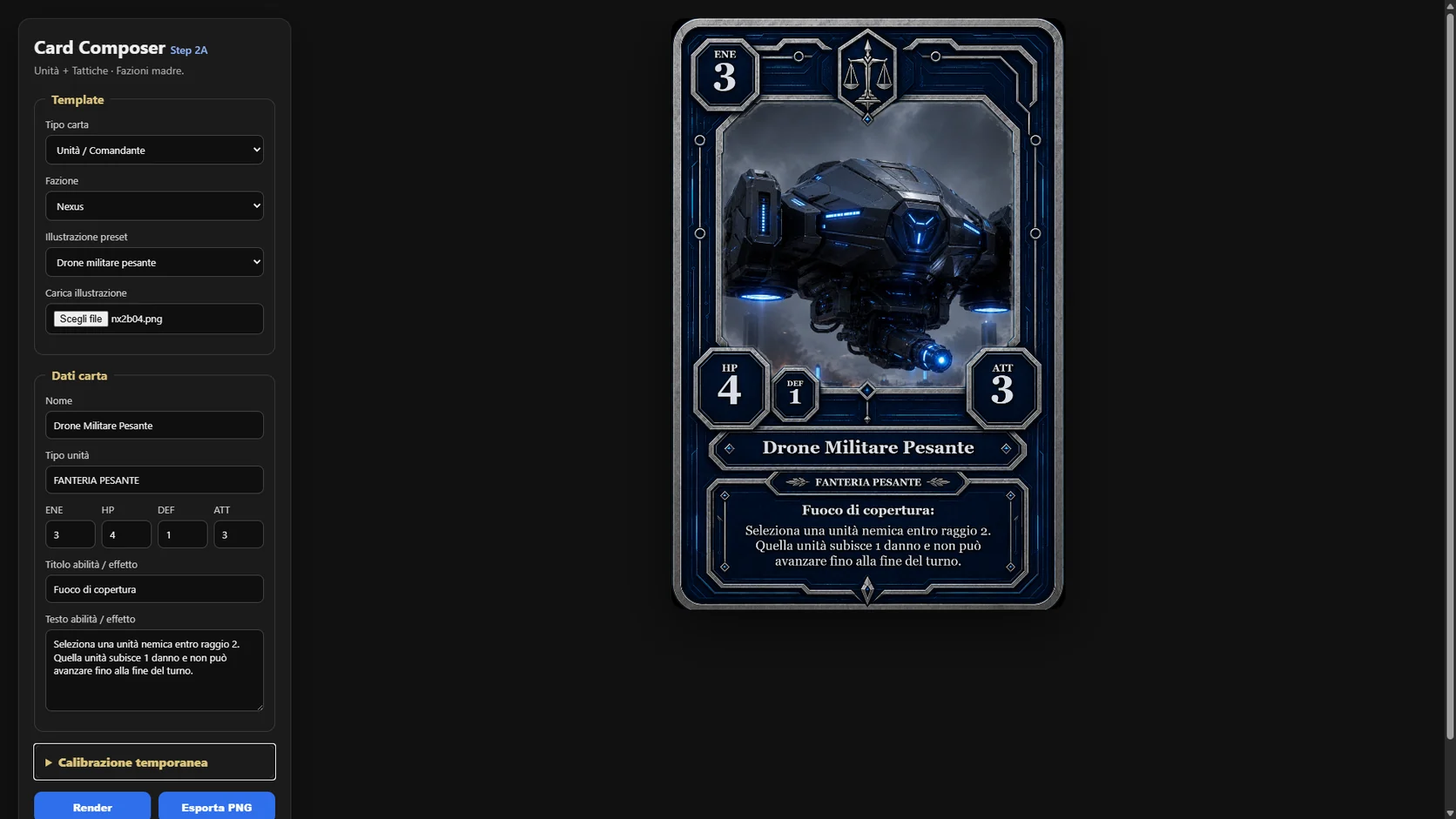
Arena Rubra Card Composer is a browser-based production companion for turning card data and artwork into faction-specific Arena Rubra card assets. The current Step 2A interface keeps the editing controls on the left and a large card render on the right, so content can be adjusted while the final visual hierarchy remains visible.
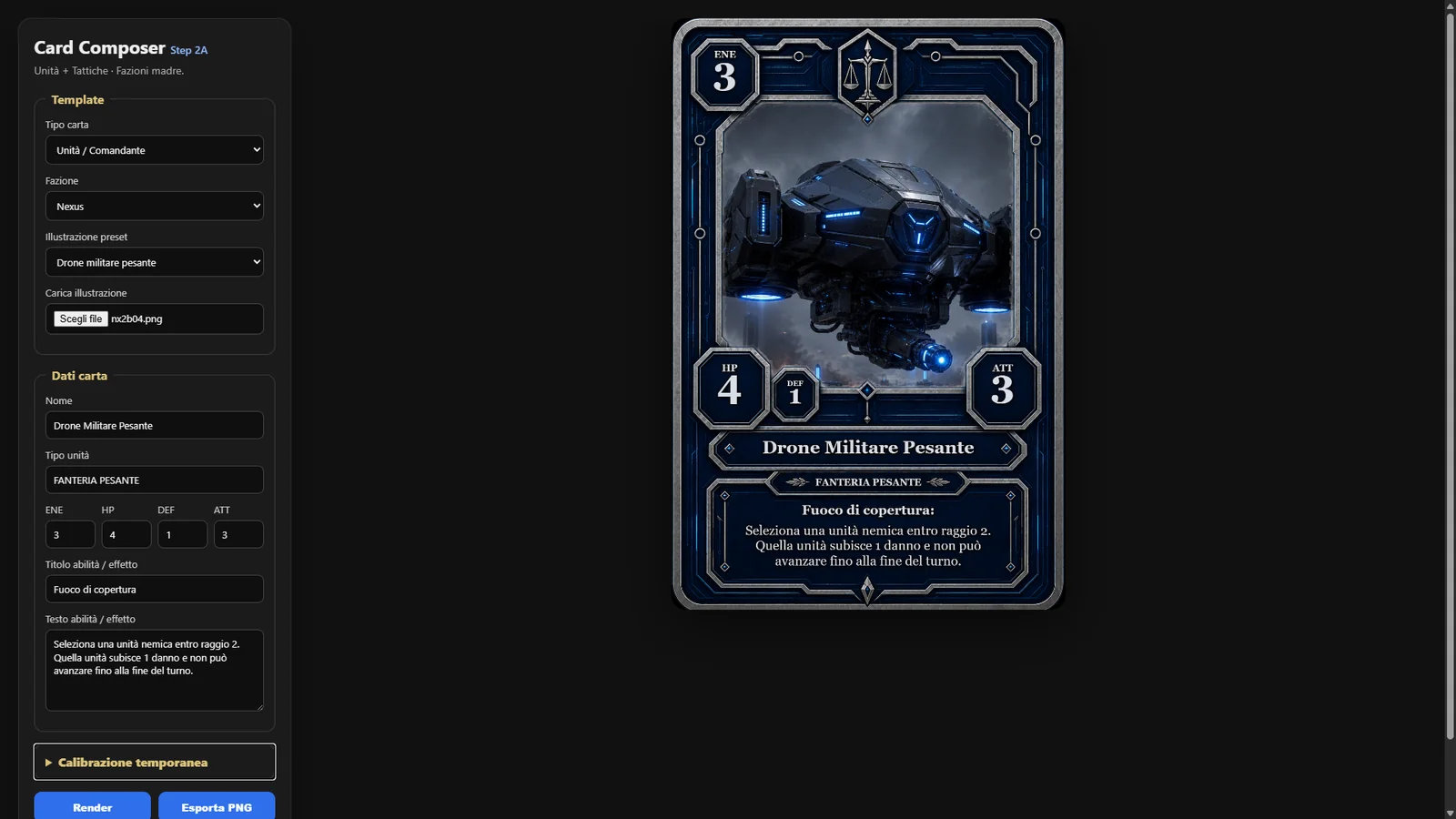
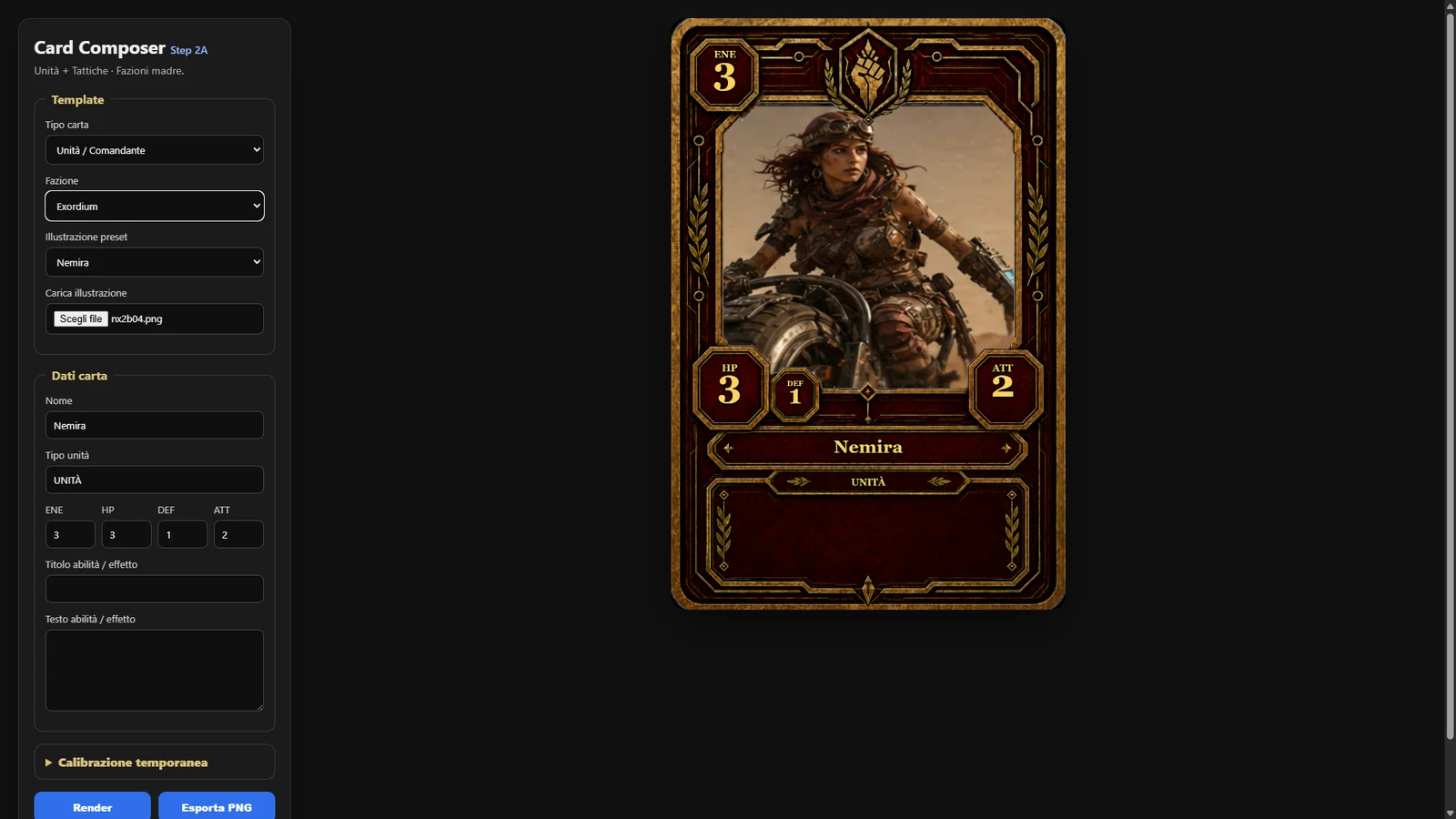
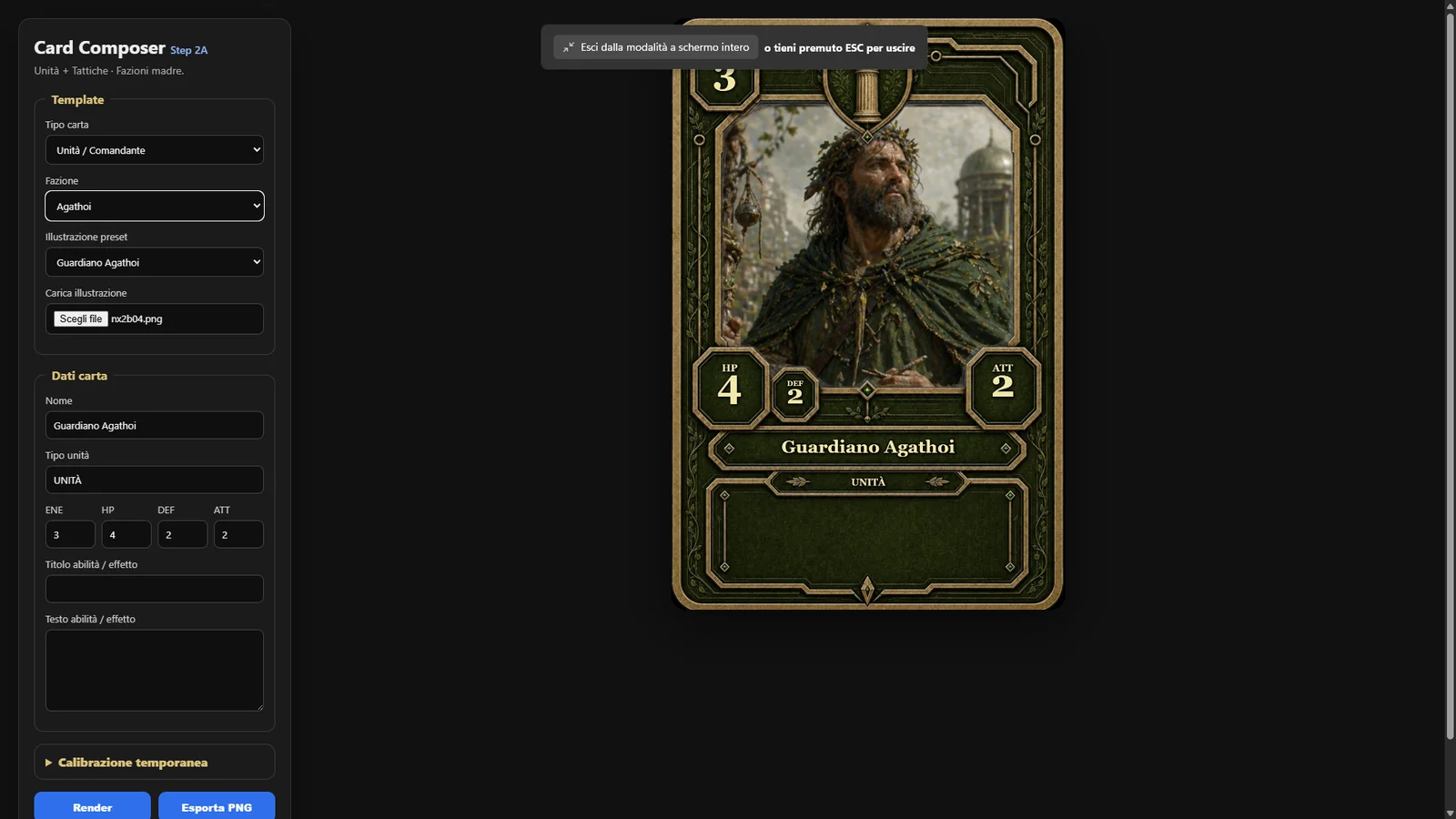
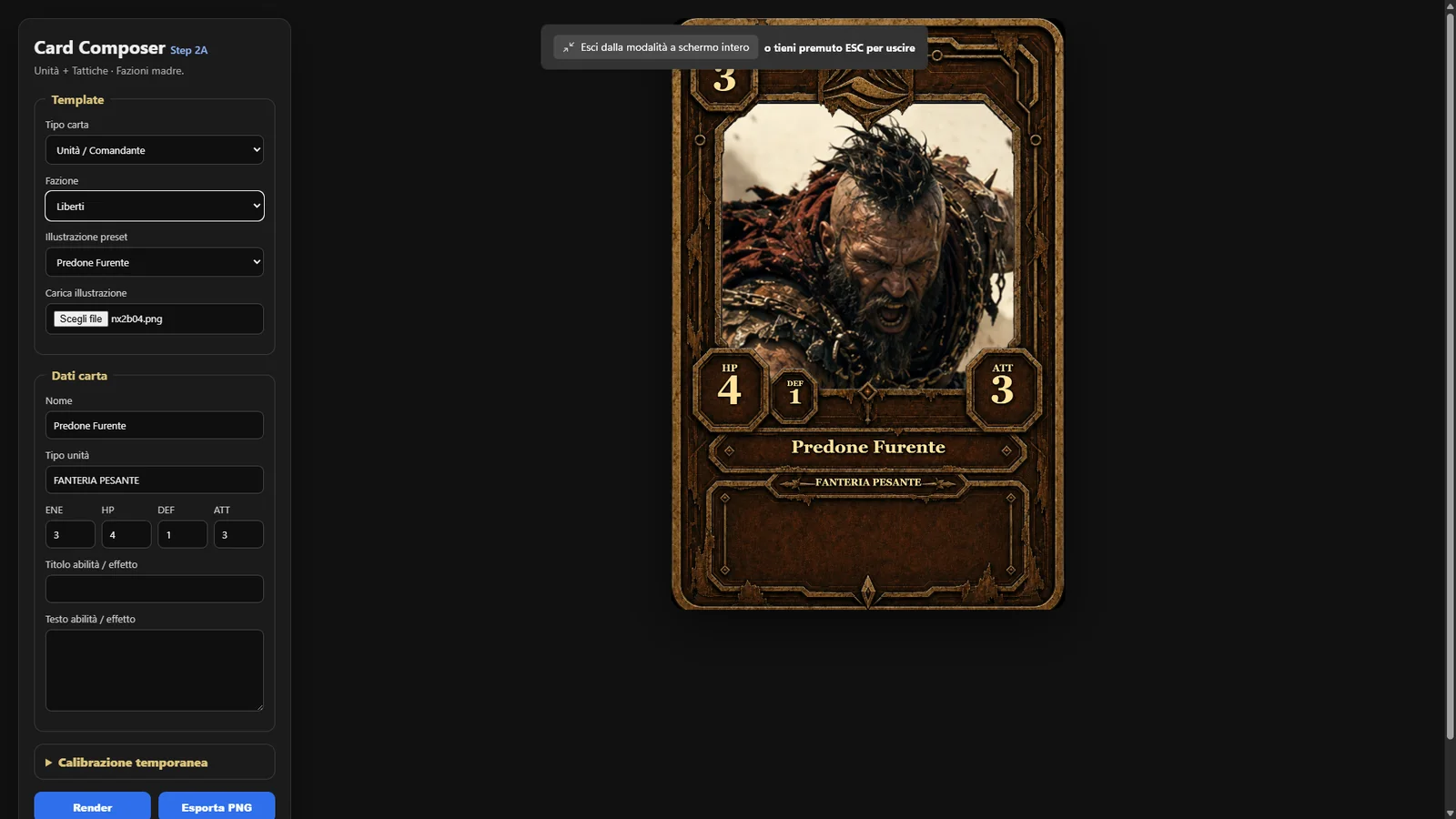
The supplied development captures show the same workflow applied to Nexus, Exordium, Agathoi and Liberti. Each keeps its own frame, emblem, palette and illustration language without requiring a separate editor for every faction.
Template first, then content
The editor starts from a card template and faction selection. The current interface exposes a card-type selector, a faction selector and an illustration preset, while also allowing an illustration file to be loaded directly.
This separates the reusable visual system from the card-specific content. A new card does not begin as an empty graphics document: it begins inside the visual grammar already established for Arena Rubra.
Structured card data
The Dati carta panel exposes the information that has to survive from game design into the rendered object: card name, unit type, ENE, HP, DEF and ATT, followed by an ability/effect title and its rules text.
That matters because the Composer is not only an image mock-up tool. Its interface reflects the actual information architecture of the cards and keeps game data, artwork and presentation in the same production step.
Render and export
The current Step 2A build provides explicit Render and Esporta PNG actions. The result is a full card image that can move into Arena Rubra’s wider asset pipeline, documentation or physical tabletop preparation without recreating the frame manually for each variation.
The screenshots also expose a Calibrazione temporanea area. It is presented here as a development control rather than as a finished public feature: the project is still being refined, and visual calibration remains part of that iteration.
Shared workflow, faction-specific identity
The development captures are useful precisely because they show four very different outputs produced from the same interface. Nexus is cold and technical; Exordium uses red and gold military heraldry; Agathoi shifts toward green, natural and civic motifs; Liberti uses a rougher, damaged bronze language.
The Composer therefore sits between two sides of Arena Rubra: the rules/data model on one side and the visual identity of the cards on the other.
Current milestone
This page documents Step 2A — Active Development from the supplied interface captures. It does not claim a hosted public runtime yet. The source repository is linked for the project itself; an online launch target can be added once the browser build has been reviewed and deployed as a stable public runtime.