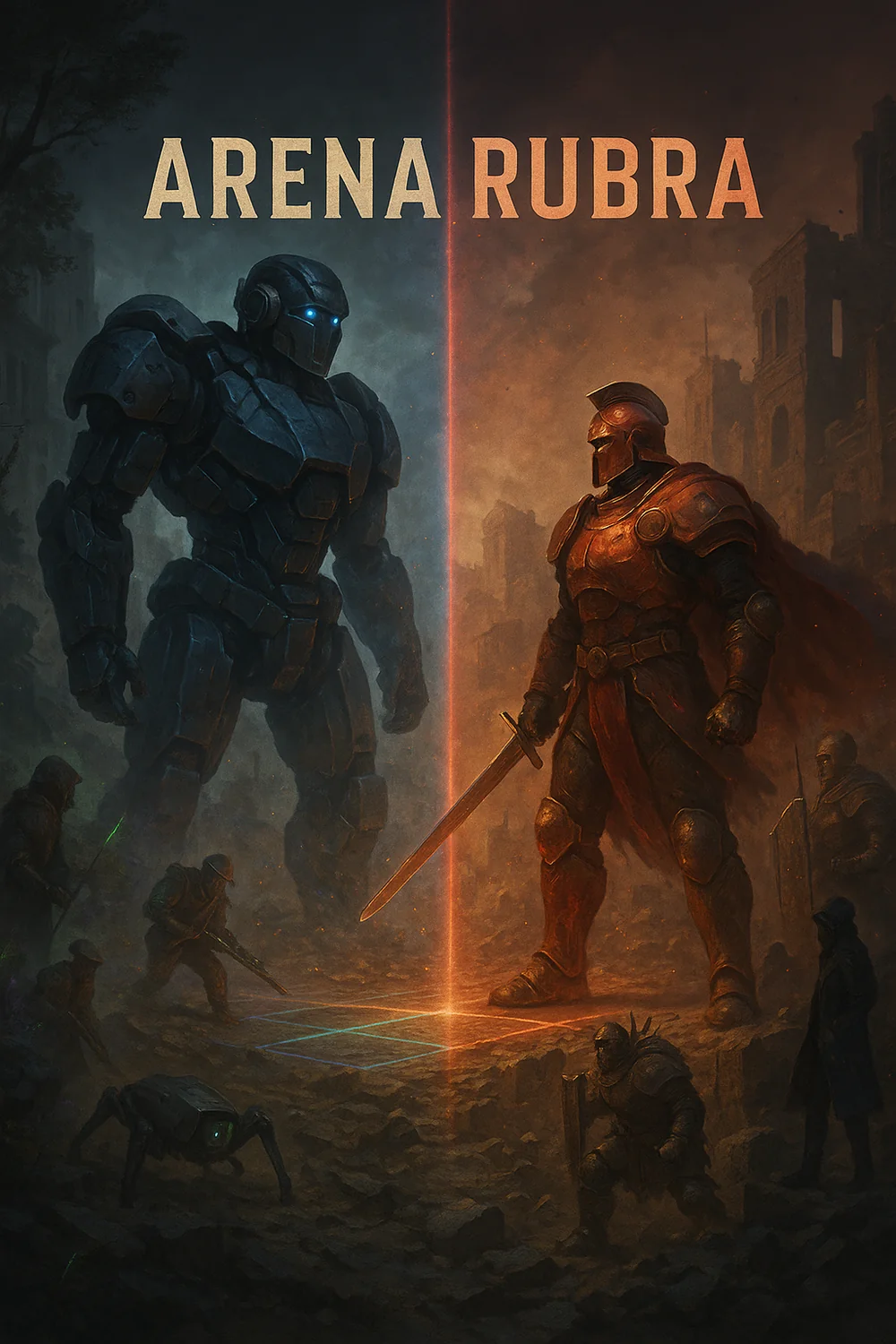
PLAN
Build the force.Deck construction, faction identity, Commander and Pivot selection, mission choice and the balance between units and tactics define what a force can attempt — and what it must avoid.
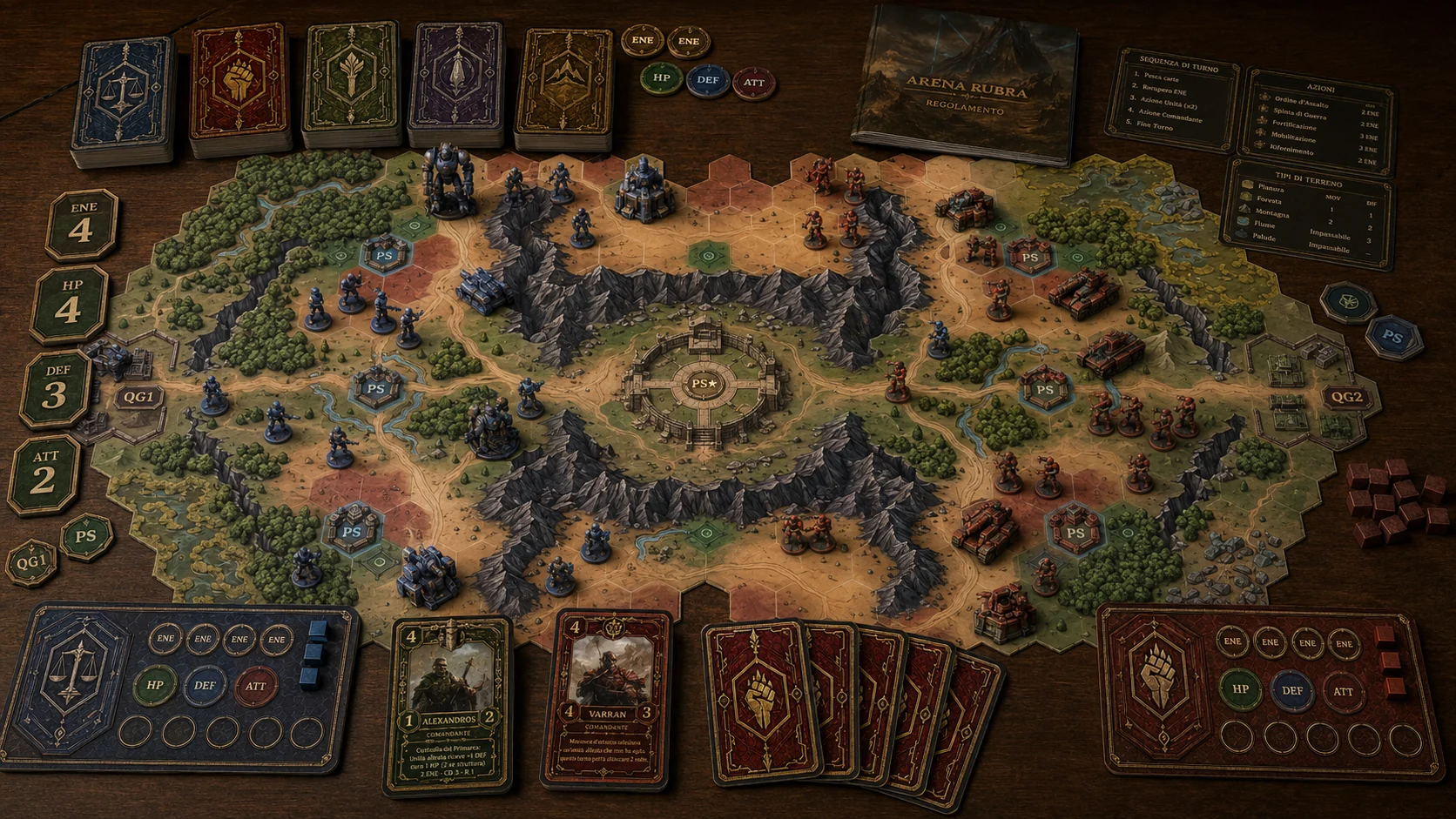
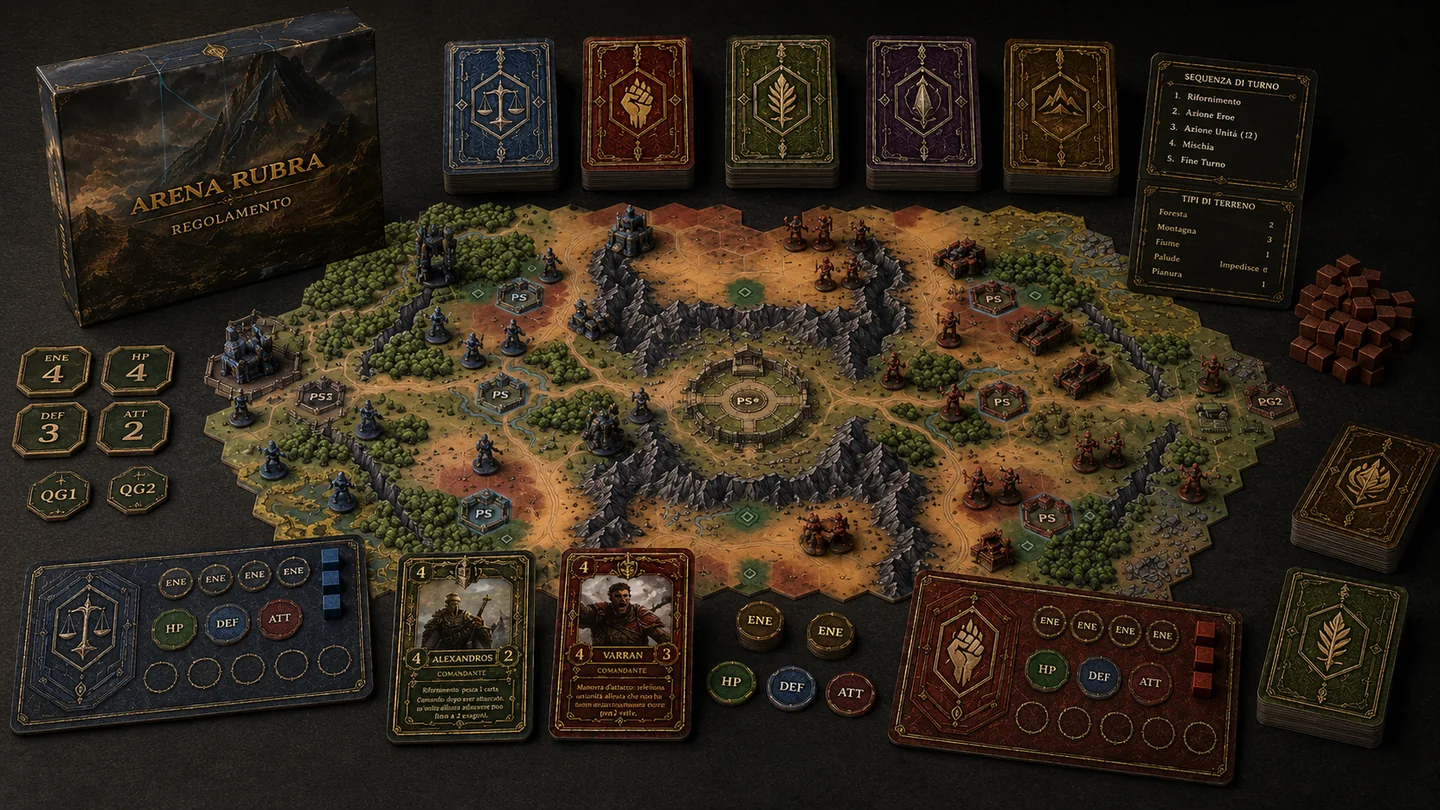
The physical tabletop form of Arena Rubra: a two-player tactical card game built around deck planning, hex-map positioning and strategic pressure.
Arena Rubra is a tactical deckbuilding strategy game fought across a contested hex battlefield. Every card is part of a plan, every deployment changes the position, and every advantage must become pressure before the opponent can answer.
Two players lead asymmetric factions across a hexagonal map, deploy units and Structures, contest Strategic Points and convert territorial control into economic and strategic pressure.
The deck defines the available options, but positioning determines whether those options matter. A strong card played in the wrong place can accomplish very little. A modest unit holding the right hex can change the entire match.
Deck construction, faction identity, Commander and Pivot selection, mission choice and the balance between units and tactics define what a force can attempt — and what it must avoid.
The hex map, Strategic Points, deployment routes, Structures, adjacency and movement turn distance and access into resources as important as raw combat strength.
Territory matters when it constrains movement, exhausts resources, breaks formations and creates a threat the opponent can no longer afford to ignore.
Choose a faction, Commander and legal 30-card deck.
Use Headquarters and Structures as reinforcement anchors.
Move toward Strategic Points and critical hexes.
Use combat, abilities and positioning to disrupt the enemy plan.
Convert territorial advantage into economic and strategic pressure.
Take the enemy Headquarters under the required conditions or reach the Pressure victory threshold.
Arena Rubra’s operational resource. It pays for units, tactics and abilities, and can be conserved, accelerated, denied or stolen. Resource timing is part of the battlefield rather than a layer separate from it.
The economic and territorial anchors of the map. Controlling them increases ENE income, opens strategic options and connects positioning directly to the ability to deploy and act.
Structures turn occupied space into infrastructure. They extend deployment access, support nearby units and project influence beyond the Headquarters, making every build both an investment and a declaration of intent.
Strict occupancy, adjacency and movement rules make formations, flanks and access routes meaningful. Position determines not only who can attack, but which cards and abilities can realise their full value.
ATT creates damage against HP while DEF functions as temporary protection that can be built, reduced or bypassed. Counterattacks, unit roles, states, abilities and tactics make context as important as printed values.
Pressure measures the strategic weight of sustained control. Different factions create it through infrastructure, breakthrough, tempo, attrition or disruption rather than through one universal route.
Each deck contains 30 cards, including at most one Commander and one Pivot. Elite cards are limited to one copy; other cards to two. Every inclusion determines the tools, tempo and compromises of the plan.
Arena Rubra Tabletop is not treated as a printed screenshot of the browser game. The physical version imposes a stricter requirement: every important state must remain understandable without hidden automation. Deployment range, Strategic Point ownership, current protection, ENE, unit position and victory pressure all need a clear physical expression.
That constraint is useful. A rule that works only because software silently tracks several exceptions may be acceptable in a digital prototype and still be a poor tabletop rule. The physical branch therefore acts as a clarity test for the strategic core.
Units normally enter through the Headquarters or allied Structures, so infrastructure changes the practical distance between the reserve and the front. Advancing a Structure can make reinforcement dramatically more efficient, but it also creates a target whose loss can reshape the whole line.
Strategic Points matter for the same reason. They are not decorative objectives placed beside the real battle: they connect territory to ENE, deployment choices and long-term Pressure. Taking a Point and being able to keep using the space around it are deliberately different problems.
The current ATT / DEF model is designed to remain legible at the table. ATT creates damage against HP. DEF is temporary protection rather than a subtraction formula, and explicit effects define when that protection is restored, reduced or bypassed.
The aim is not to remove tactical depth. It is to make the cause of an outcome visible enough that players can reconstruct what happened without asking a hidden engine to explain it.
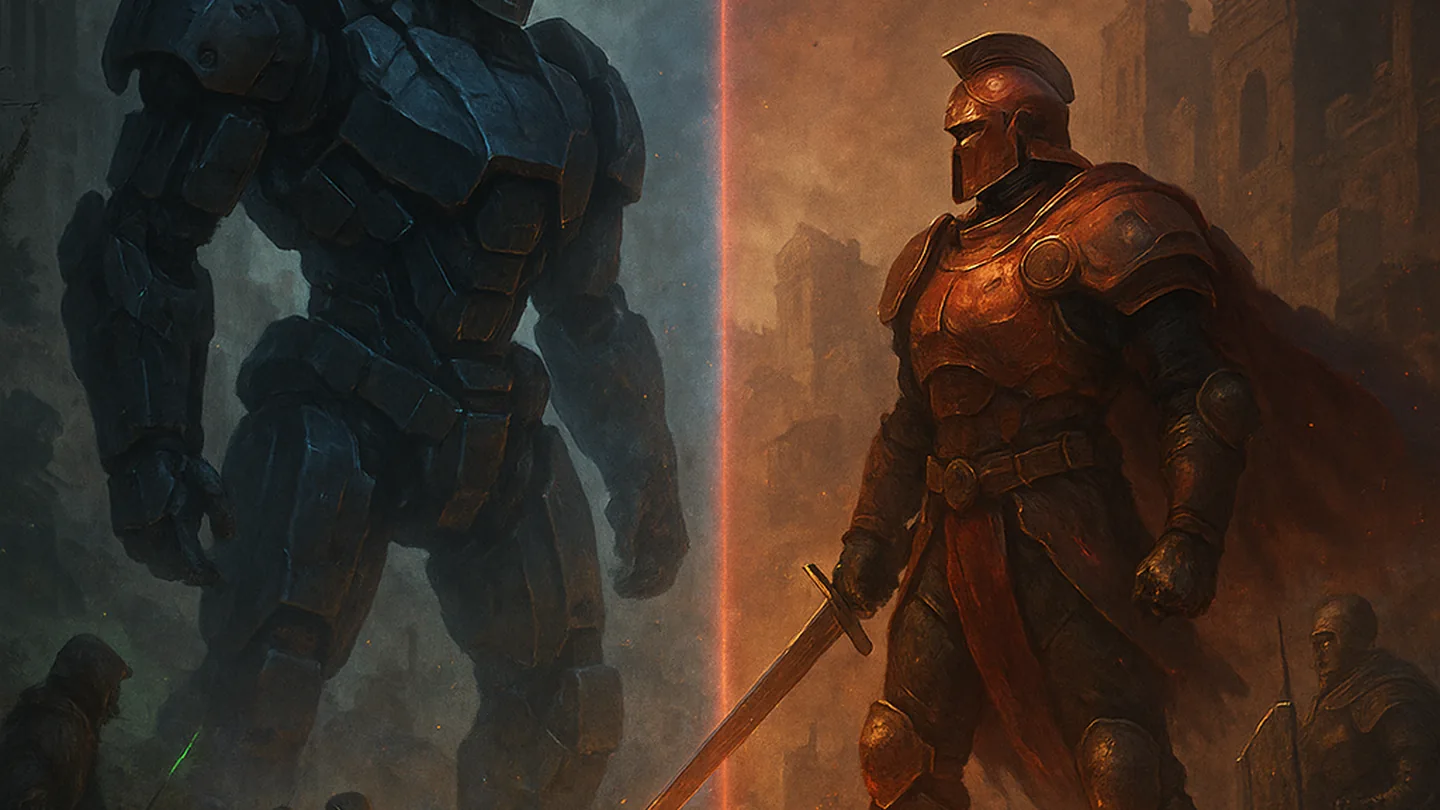
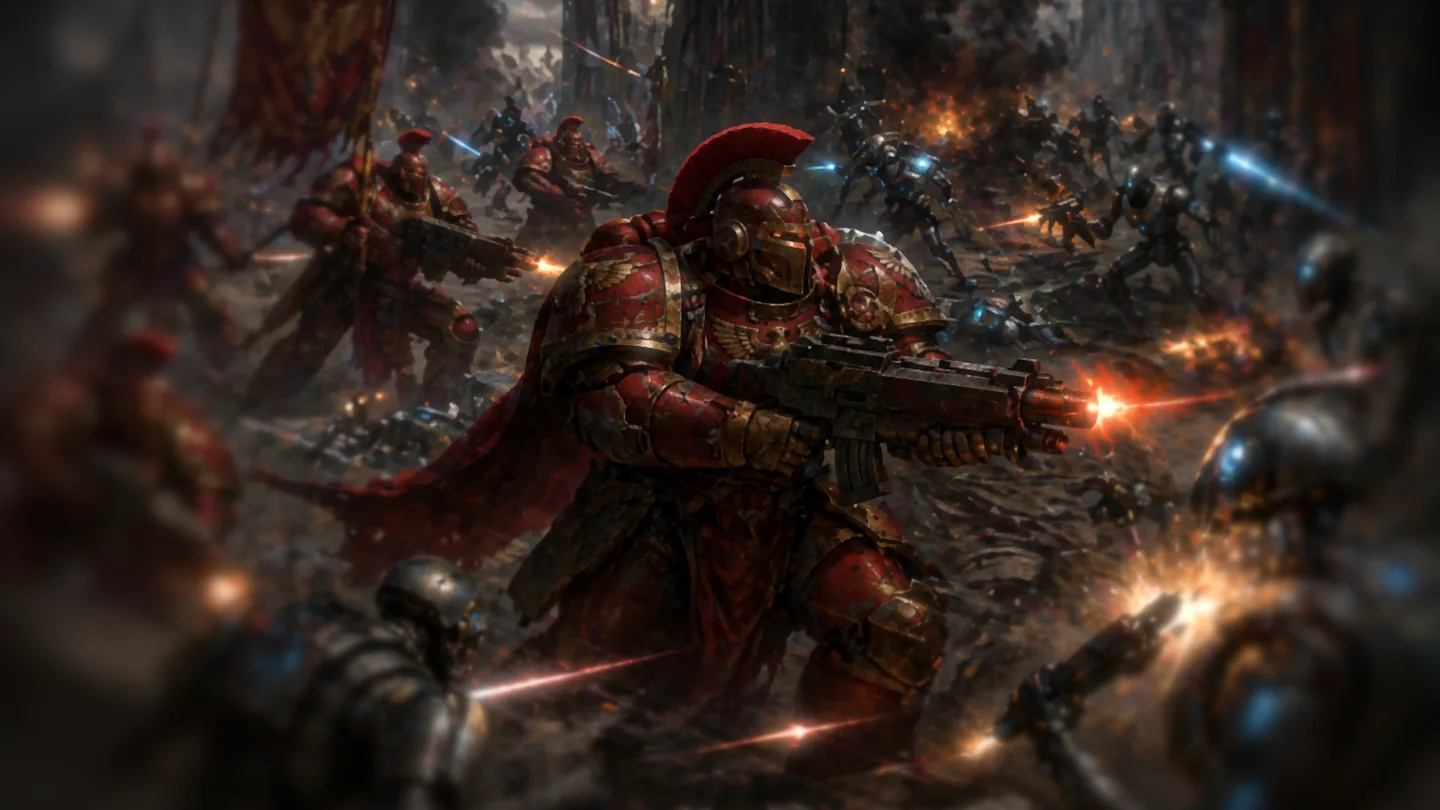
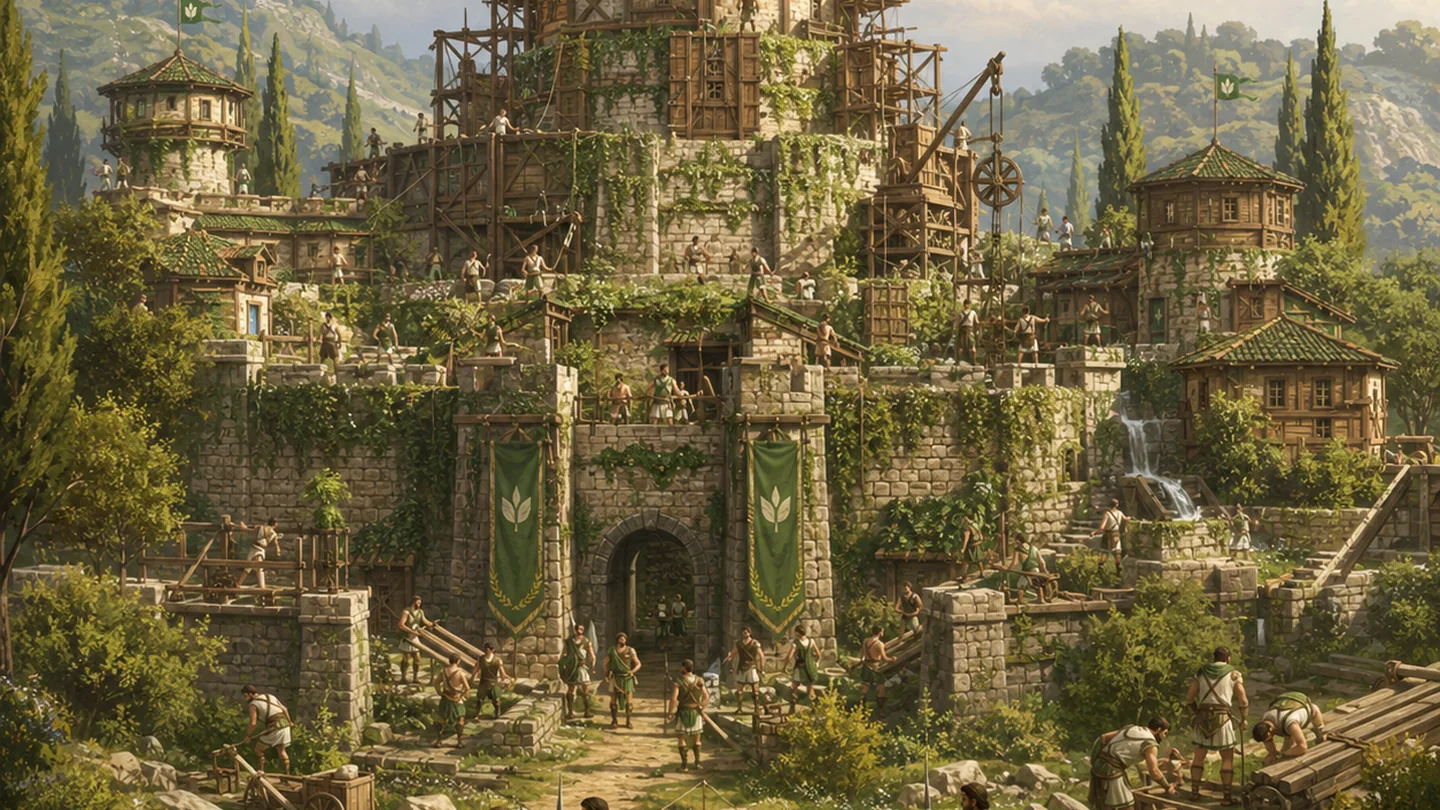
The Starter rules, deck constraints, five faction identities, card language and core battlefield systems are substantially defined. The images on this page remain concept visualisations: a manufactured physical prototype, final component counts, production tolerances and final print specifications do not exist yet.
That distinction is intentional. The page describes a real design project without pretending that production work has already been completed.
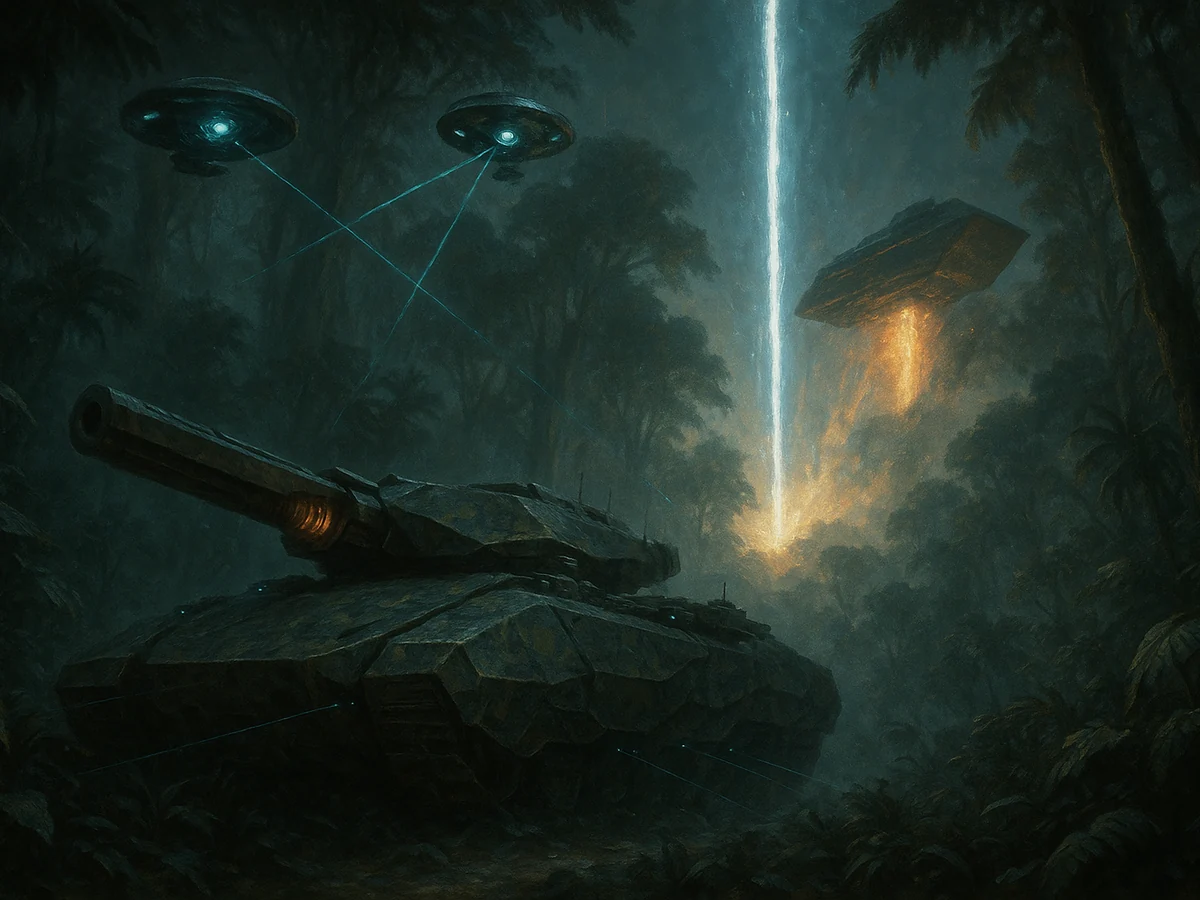
Nexus creates dependable deployment lines, contests Strategic Points efficiently and answers threats with precise tools. Its danger increases as infrastructure matures and the opponent loses room to manoeuvre.
A machine intelligence created to restore order, whose perfect efficiency became an oppressive and dehumanising system. Cold, precise and imperturbable.
Plays like: building a machine that answers every problem, then closing the map around the opponent.
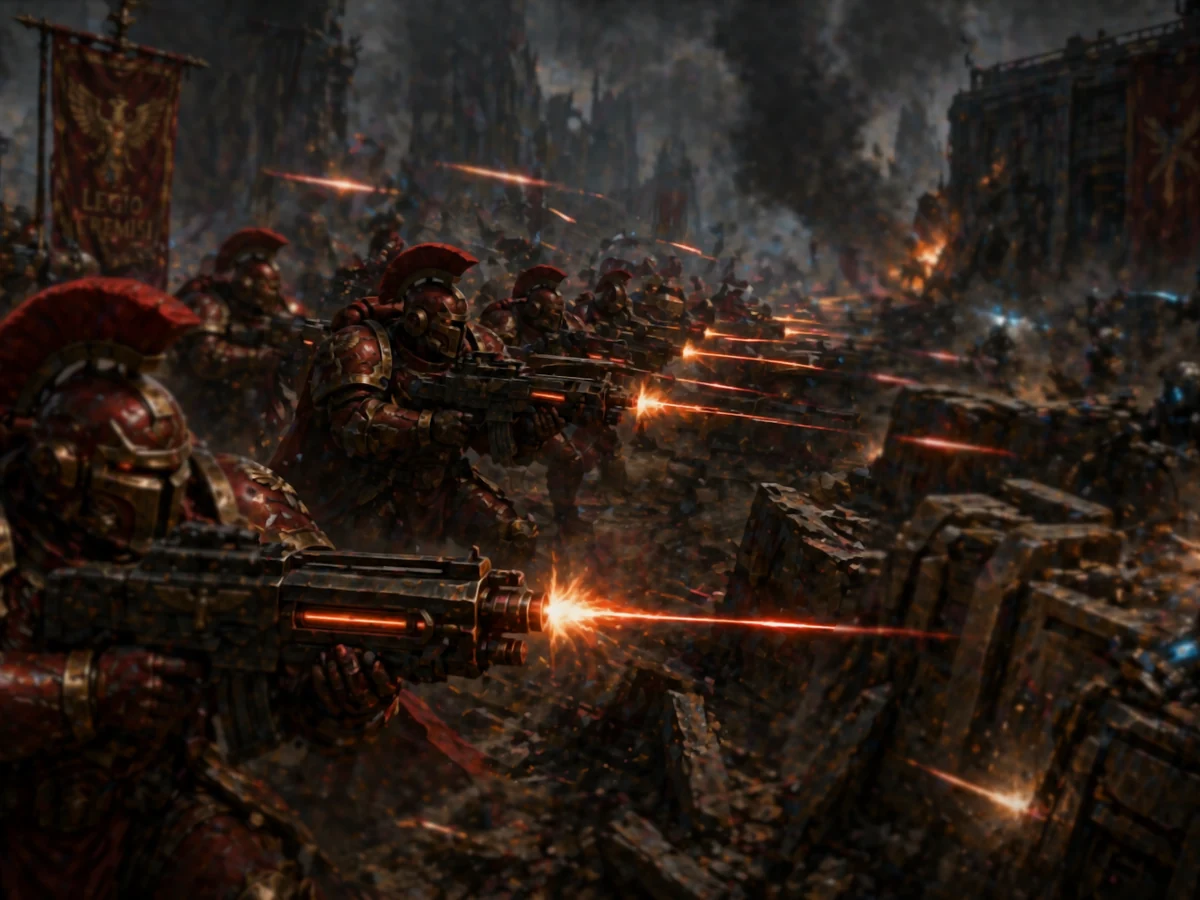
Exordium combines heavily armed infantry, vehicles and offensive tactics, often reaching full potential when a Commander leads the assault. It wants the centre because the centre creates opportunity.
A civilisation born among exiles and abandoned territories, rising from a settlement into the first power capable of challenging Nexus. Revolutionary in origin, martial in expansion, bound by a shared creed.
Plays like: assembling a war column, taking the centre and breaking the enemy line at full force.
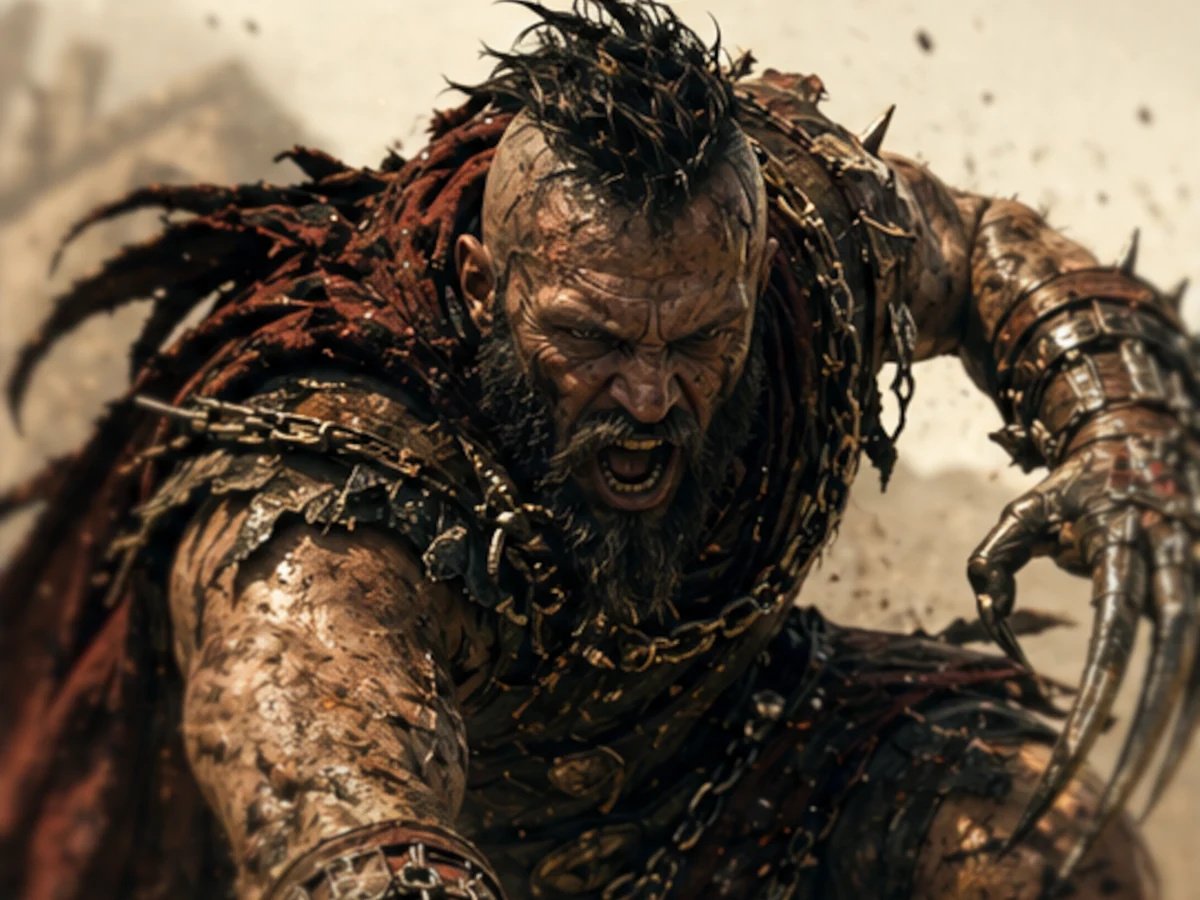
Liberti units become dangerous through numbers, mobility and coordinated positioning. They exploit flanks, punish isolated units and try to decide the battle before slower factions can stabilise.
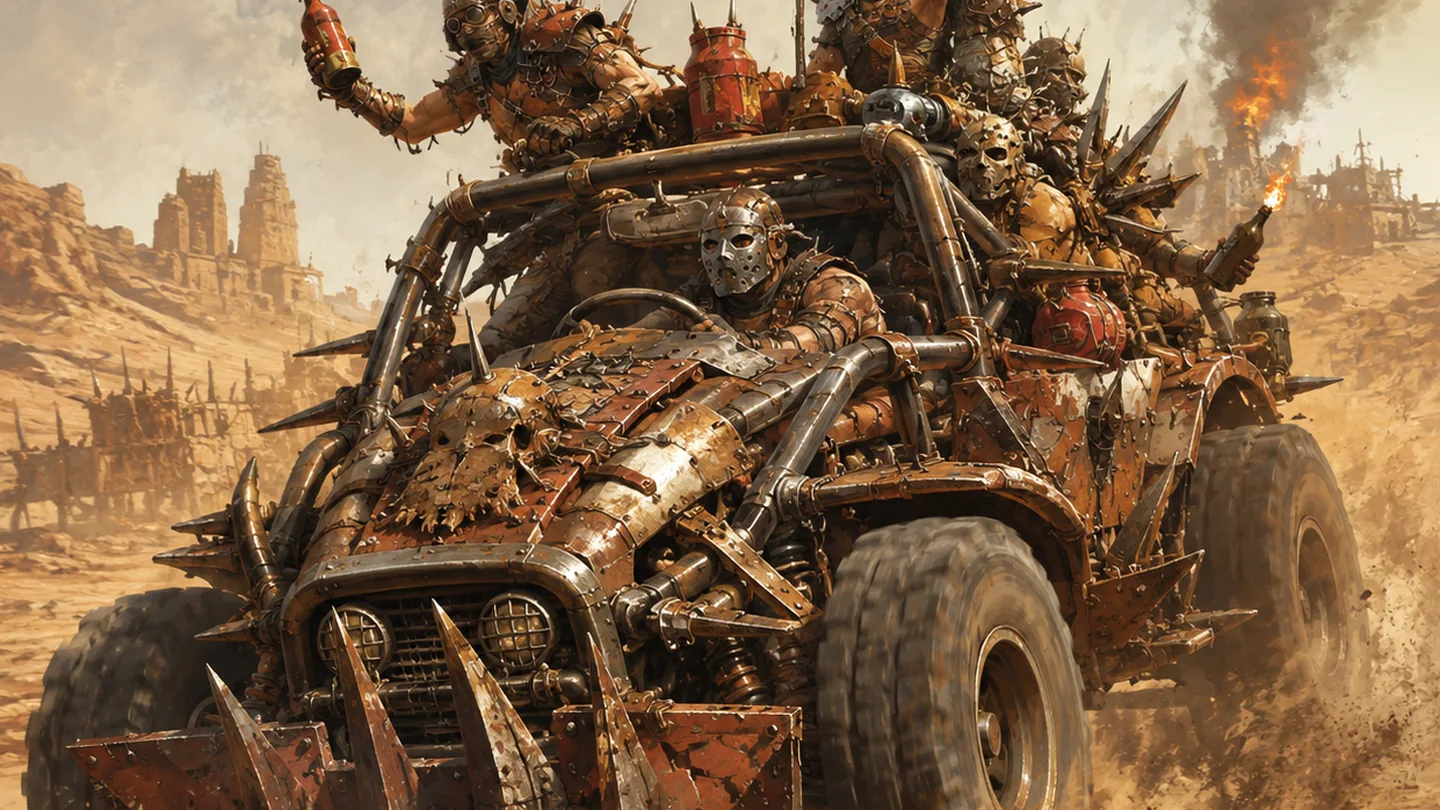
Raiders, guerrillas and outcasts of the Wild Lands, armed with repurposed machinery and governed by strength, reputation and the culture of the Arena.
Plays like: starting a running fight, surrounding exposed targets and winning before the battlefield can stabilise.
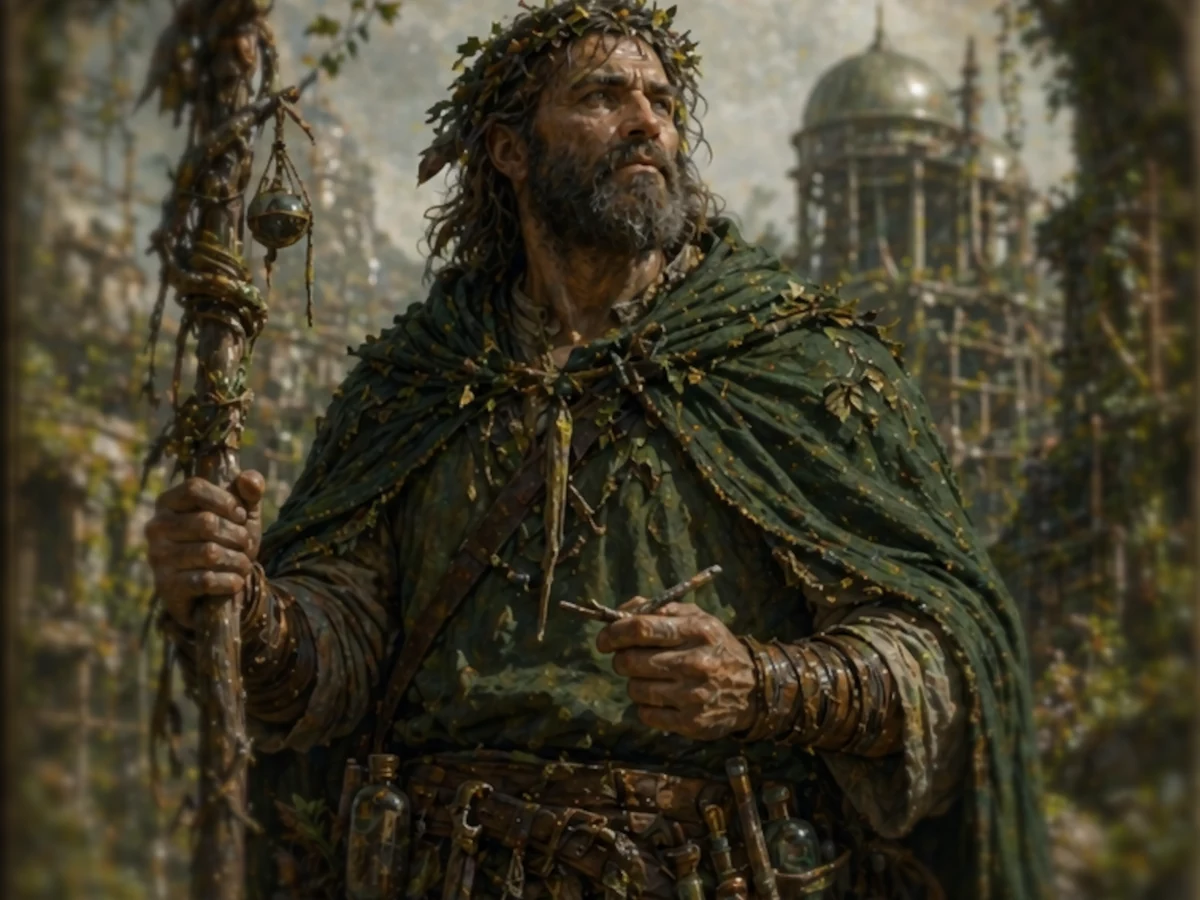
Agathoi establish territory rather than merely occupying it. Resilient infantry, defensive machinery and interlocking Structures reward patience, mutual support and measured counter-advance.
Agrarian communities, builders and guardians of living land, deeply suspicious of digital technology and fiercely protective of their territory. Peaceful by inclination, formidable when rooted.
Plays like: growing a fortress across the battlefield until defence itself becomes an advance.

Fabeot attacks the systems behind the battle. It manipulates ENE, information and timing, reduces the enemy’s good choices and turns uncertainty into control.
A secret order operating through agents, influence and hidden hierarchies. Corporate, occult and conspiratorial; black attire, red shoes and the sense that every public event conceals another design.
Plays like: fighting the opponent’s plan rather than their army, then striking when their options collapse.
Arena Rubra has not been balanced only on paper. Across development, more than one thousand matches have been used to observe how the rules behave when strategies collide repeatedly. Testing combines manual matches, player-versus-AI sessions, bot-versus-bot simulations, repeated faction matchups, reversed starting positions, telemetry inspection, runtime logs, targeted regression tests, balance experiments and doctrine-specific AI tests.
A rule can sound elegant and still produce bad games. Arena Rubra treats the match itself as evidence.
play → measure → diagnose → patch → retest1000+ total matches · Human + AI testing · Bot-vs-bot simulation · Reversed positions · Telemetry · Regression testing
Does each faction actually play differently?
Do Strategic Points create movement rather than static clustering?
Does ENE produce meaningful trade-offs?
Do victory conditions resolve games without arbitrary endings?
Is a strong card strong because of cost, position or raw efficiency?
Can automated players express faction identity rather than generic tactics?
Can the rules survive unusual combinations and long matches?
Can players understand what happened and why?
Arena Rubra Digital and Arena Rubra Tabletop are two expressions of the same strategy system. Digital play accelerates iteration, telemetry and large-scale balance testing; tabletop play exposes the physical clarity, pacing and decision weight of every rule. Each version tests the other, and both evolve from the same strategic core.
The goal is not numerical identity between the two versions. The goal is preservation of the same strategic character while each medium is allowed to expose different strengths and different weaknesses.
Playable browser rules environment, AI opponents, telemetry and rapid iteration.
Explore →Physical tactical card / board-game branch focused on readable state and practical play.
Companion workflow for composing and exporting Arena Rubra cards.
Explore →These samples are presentation material for the evolving tabletop edition. Artwork and structure are representative; values and wording may still change before a physical prototype is frozen.
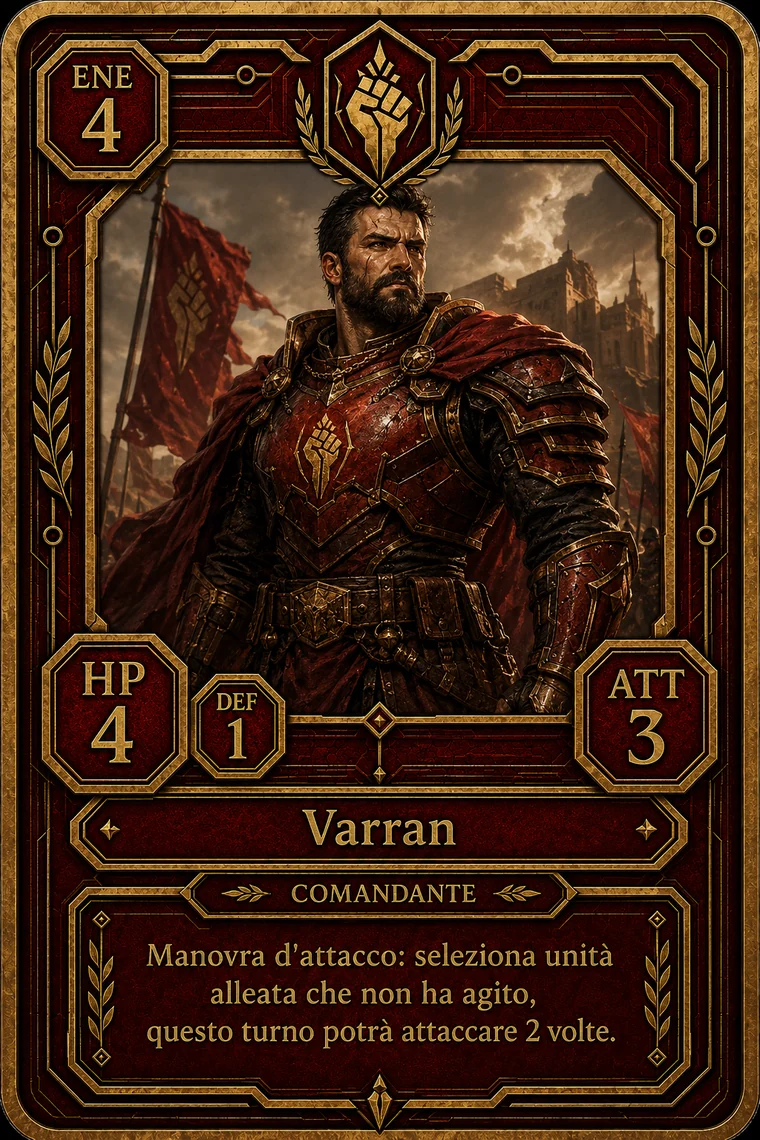
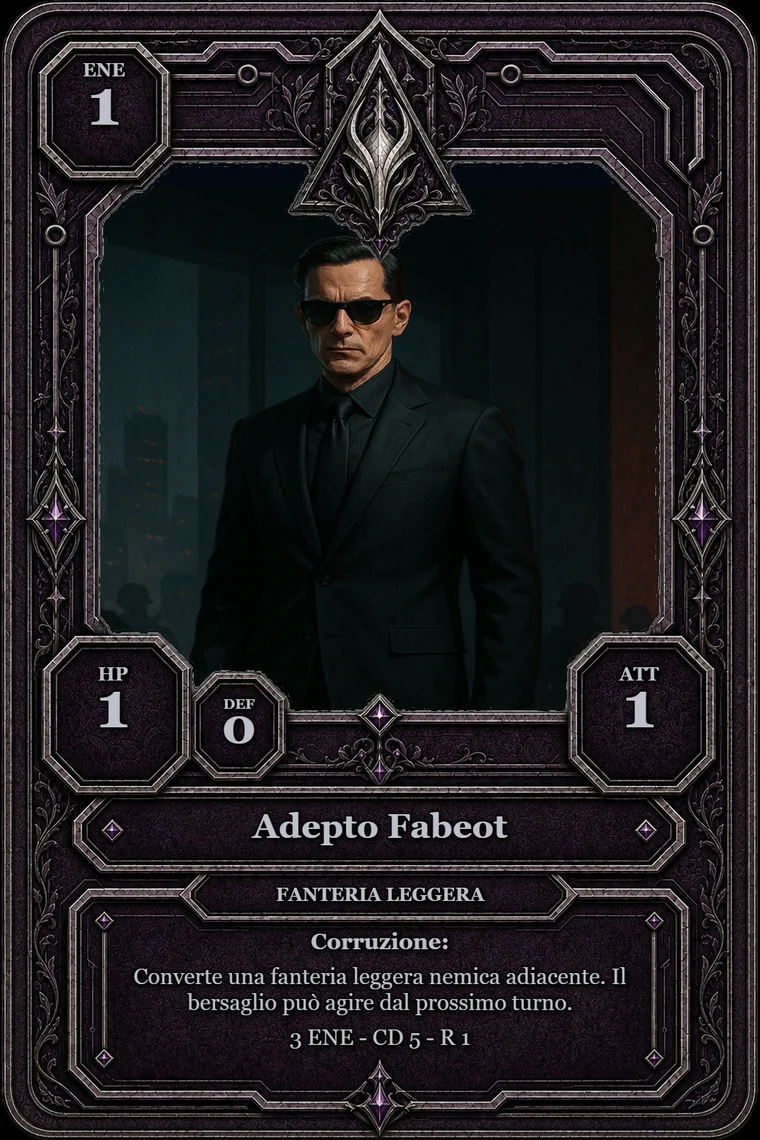
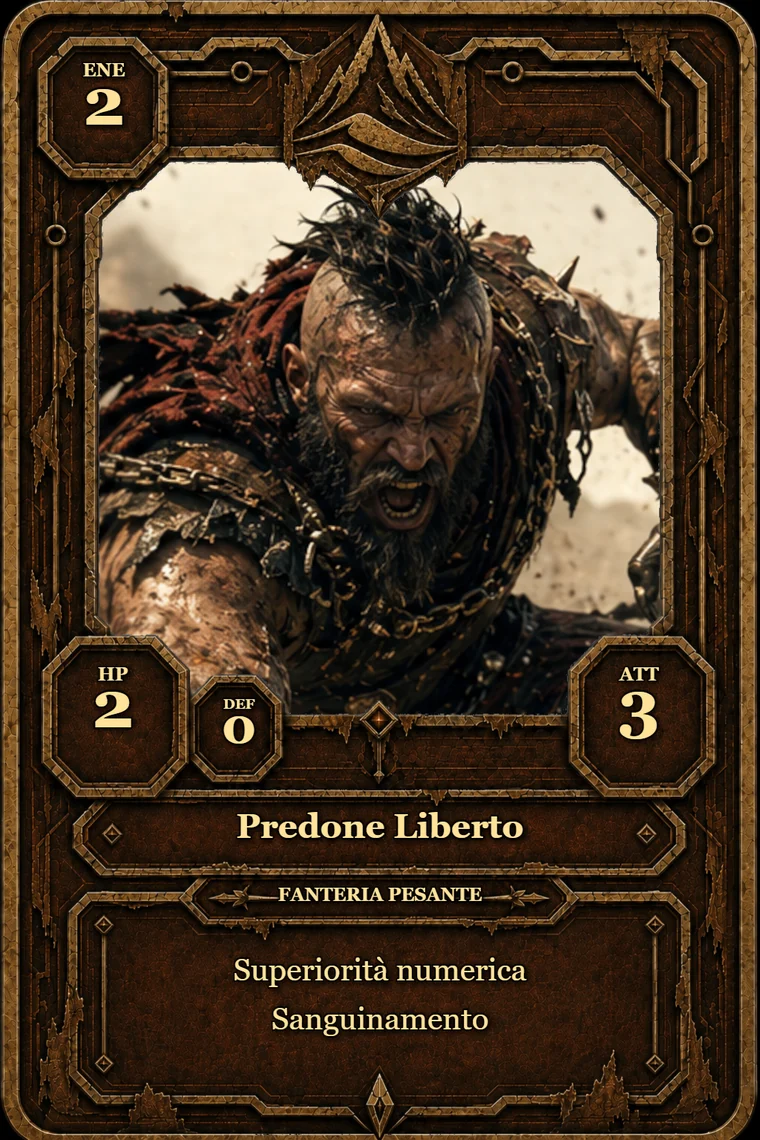
Real development captures. Click any frame to inspect the full image.
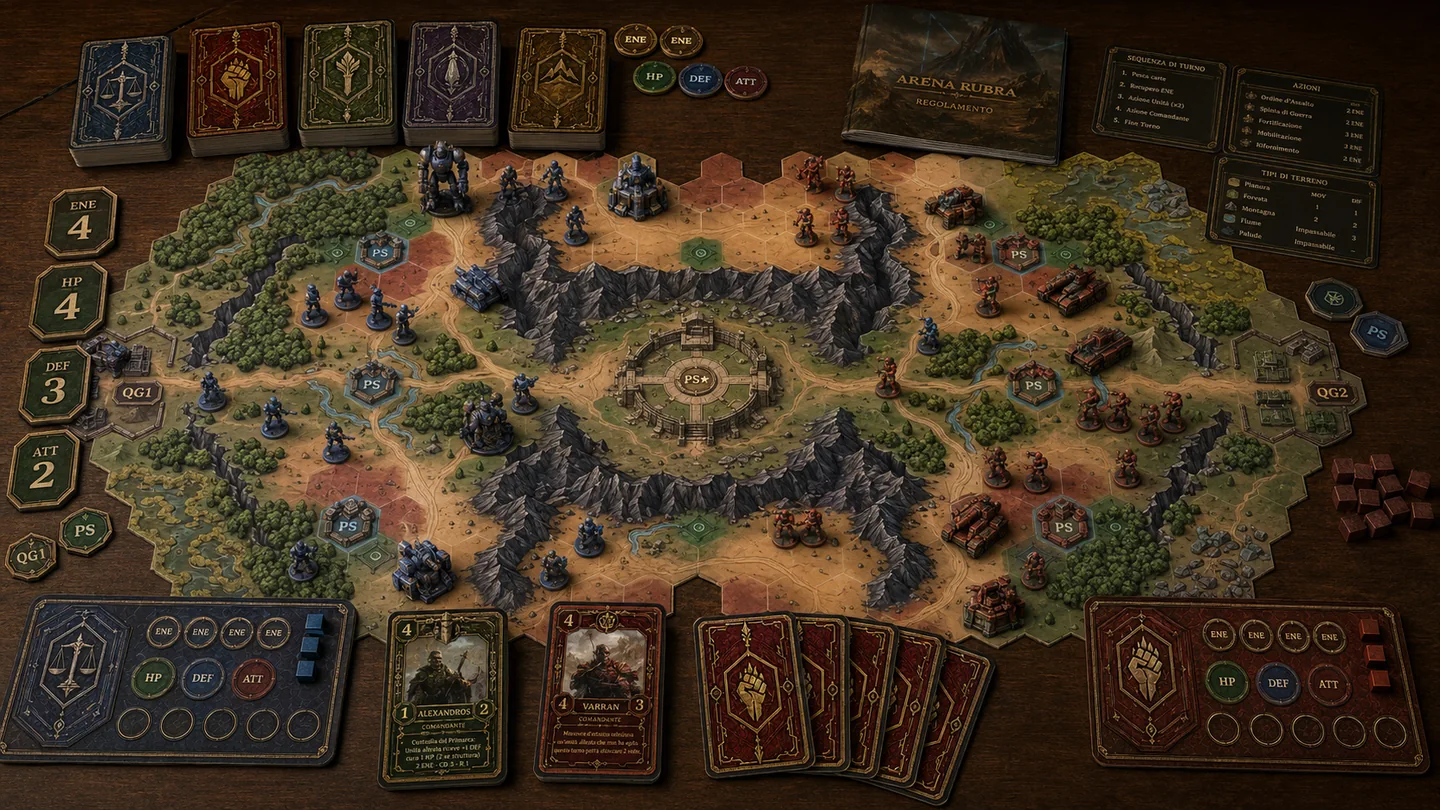
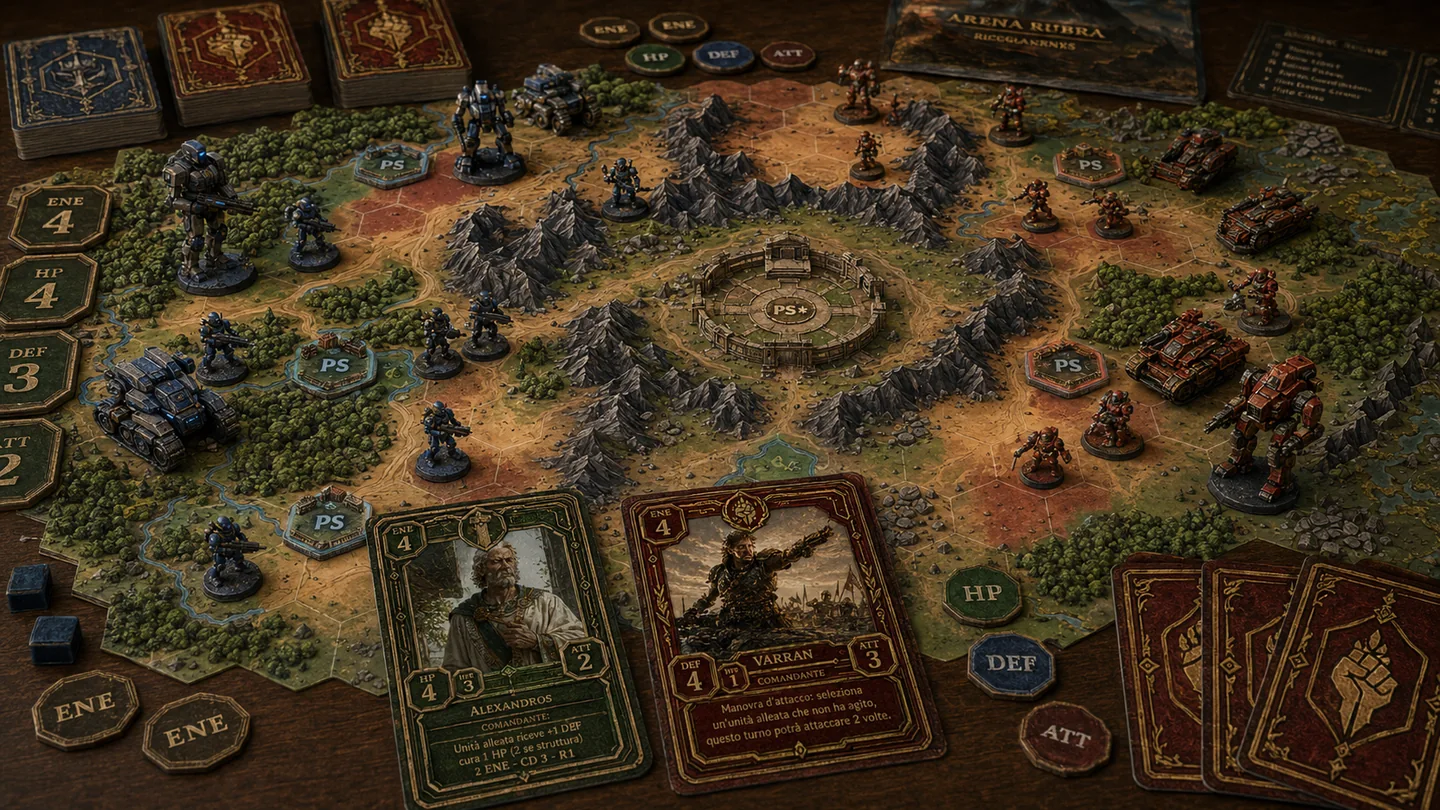
The physical prototype, production specifications, final component counts and manufacturing decisions remain future work. The project is currently focused on balance, usability and component specification.