Executable rules
The browser build resolves movement, combat, states, targeting, ENE, deployment and victory checks as an executable rules environment rather than a static presentation.

A tactical card game on a hexagonal battlefield, combining cards, territorial control, faction identity and an evolving digital ruleset.
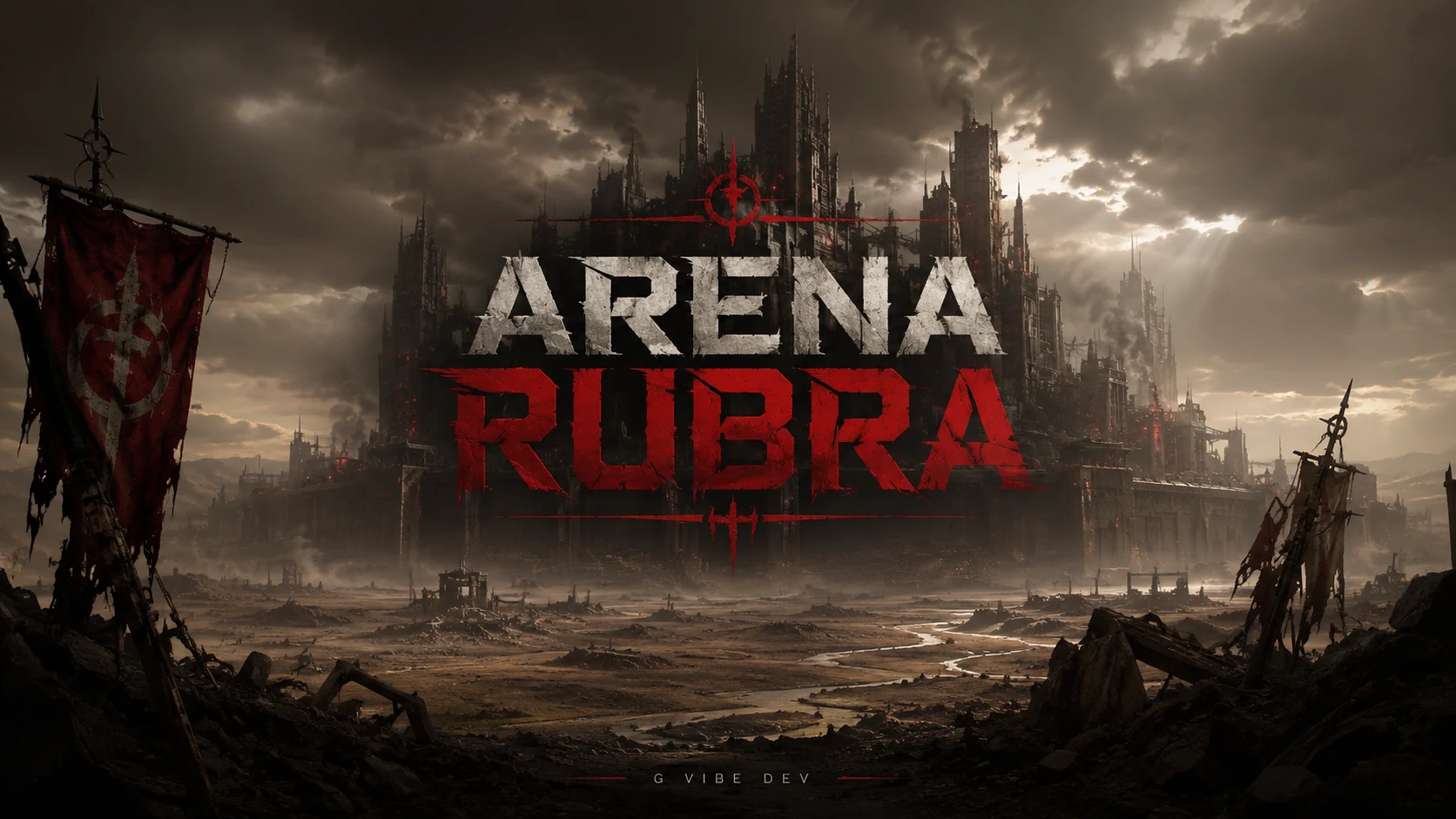
Arena Rubra Digital turns the rules into an environment that can be executed repeatedly, inspected and revised. The visible match is only one part of the application.
Deck tools, map authoring, tutorials, AI opponents, history, telemetry and diagnostics make the browser version useful both to players and to the design process itself.
The browser build resolves movement, combat, states, targeting, ENE, deployment and victory checks as an executable rules environment rather than a static presentation.
Play, card tools, maps, analysis, settings, version information and diagnostics are gathered into one operational hub.
A card library, rendered card data and deck-building workflows let the content layer be inspected and changed without losing the rules context.
Official and custom battlefields can be inspected, validated and edited through a dedicated hex-map workflow.
Structured lessons use narrator overlays, highlights and controlled states to teach rules inside the actual game.
Automated players are used both as opponents and as repeatable behavioural test subjects for faction doctrines.
Match state, seeds, economy, card use and other runtime evidence can be exported and inspected instead of relying only on memory.
Debug, logs, import/export and explicit baseline information make regressions easier to reproduce and compare.
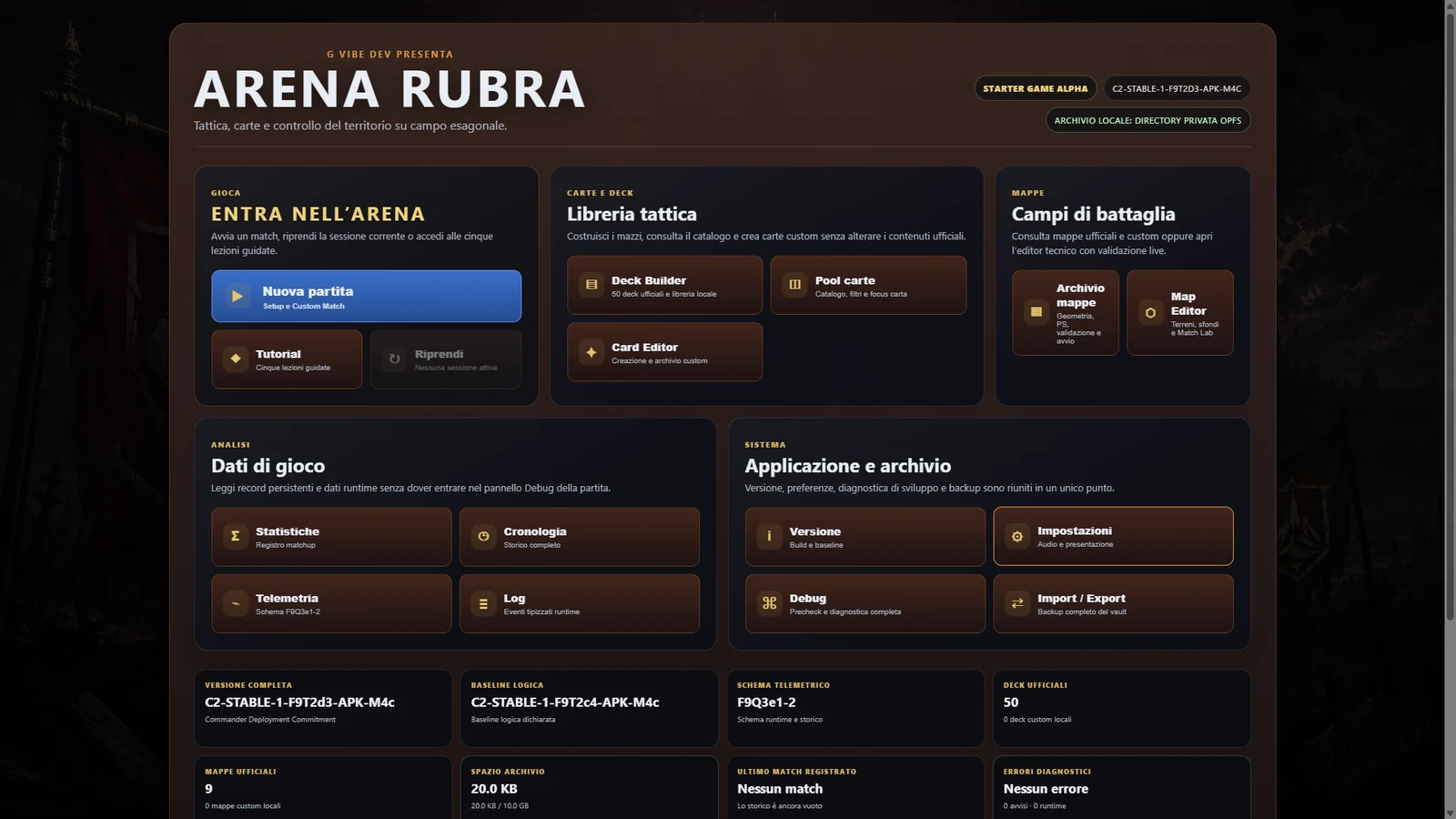
The Control Center exposes the parts normally hidden behind a development build: content, maps, statistics, telemetry, logs, version state, settings, diagnostics and archive operations.
That matters because a behavioural problem can be traced through evidence instead of being reduced to “the match felt wrong.”
The common faction descriptions below come from the shared Arena Rubra data source used by both Digital and Tabletop. The digital branch adds a testing interpretation rather than maintaining a second copy of the canon.

Nexus creates dependable deployment lines, contests Strategic Points efficiently and answers threats with precise tools. Its danger increases as infrastructure matures and the opponent loses room to manoeuvre.
A machine intelligence created to restore order, whose perfect efficiency became an oppressive and dehumanising system. Cold, precise and imperturbable.
Plays like: building a machine that answers every problem, then closing the map around the opponent.
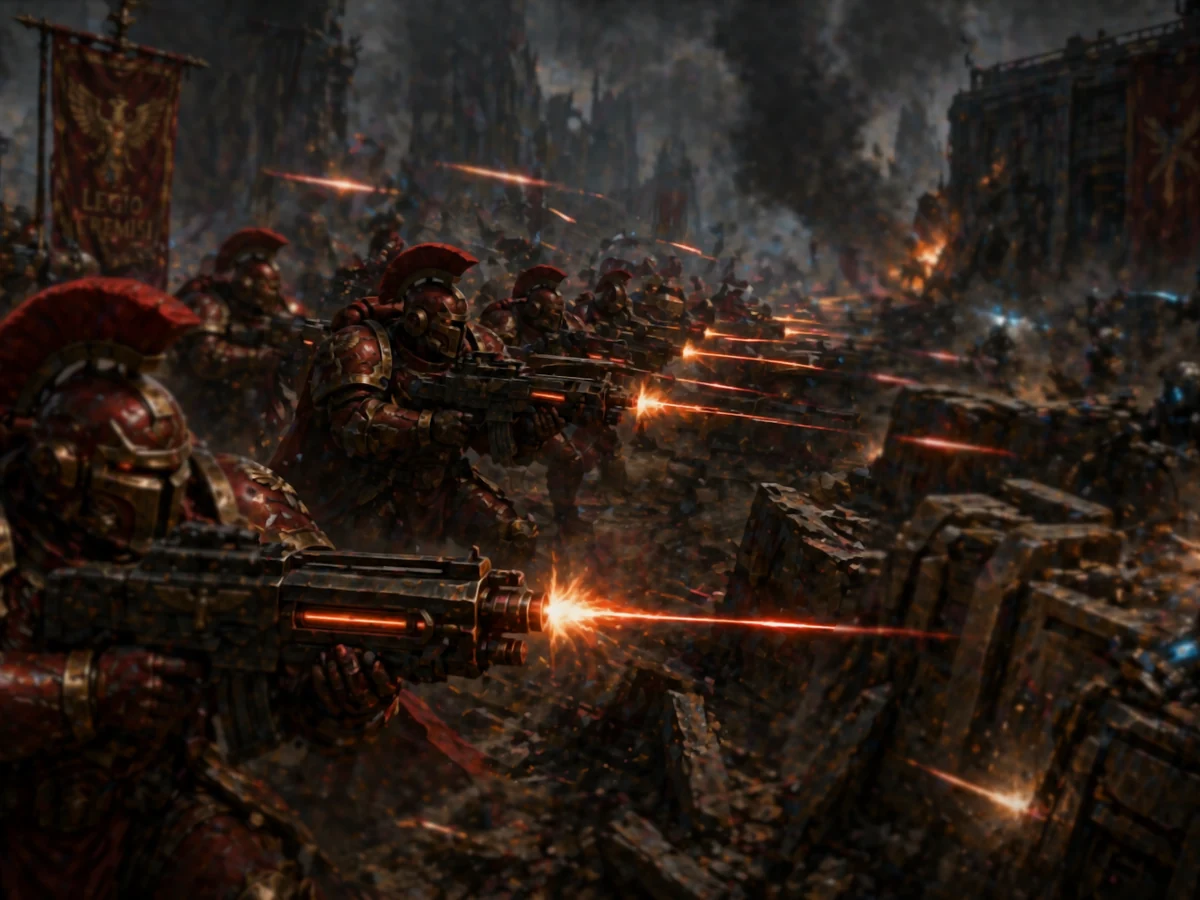
Exordium combines heavily armed infantry, vehicles and offensive tactics, often reaching full potential when a Commander leads the assault. It wants the centre because the centre creates opportunity.
A civilisation born among exiles and abandoned territories, rising from a settlement into the first power capable of challenging Nexus. Revolutionary in origin, martial in expansion, bound by a shared creed.
Plays like: assembling a war column, taking the centre and breaking the enemy line at full force.
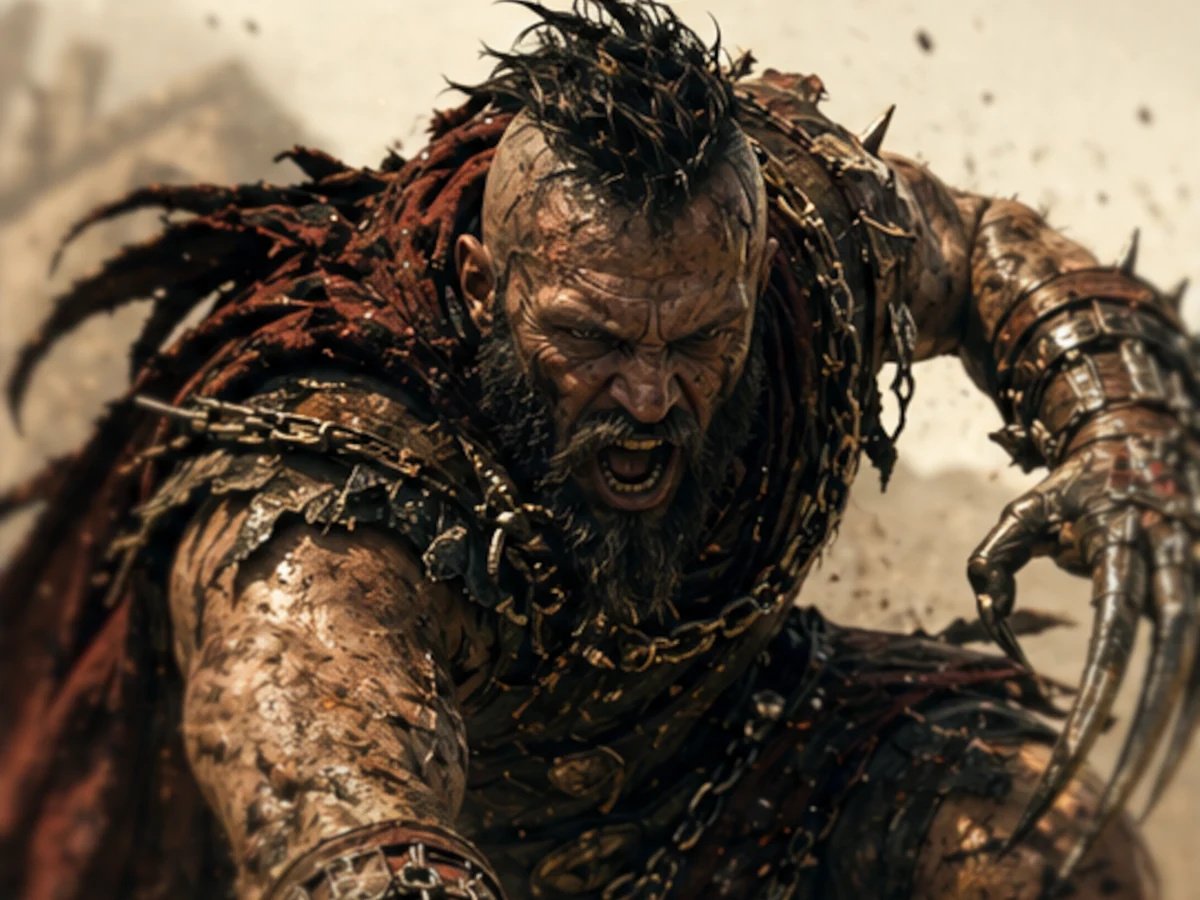
Liberti units become dangerous through numbers, mobility and coordinated positioning. They exploit flanks, punish isolated units and try to decide the battle before slower factions can stabilise.
Raiders, guerrillas and outcasts of the Wild Lands, armed with repurposed machinery and governed by strength, reputation and the culture of the Arena.
Plays like: starting a running fight, surrounding exposed targets and winning before the battlefield can stabilise.
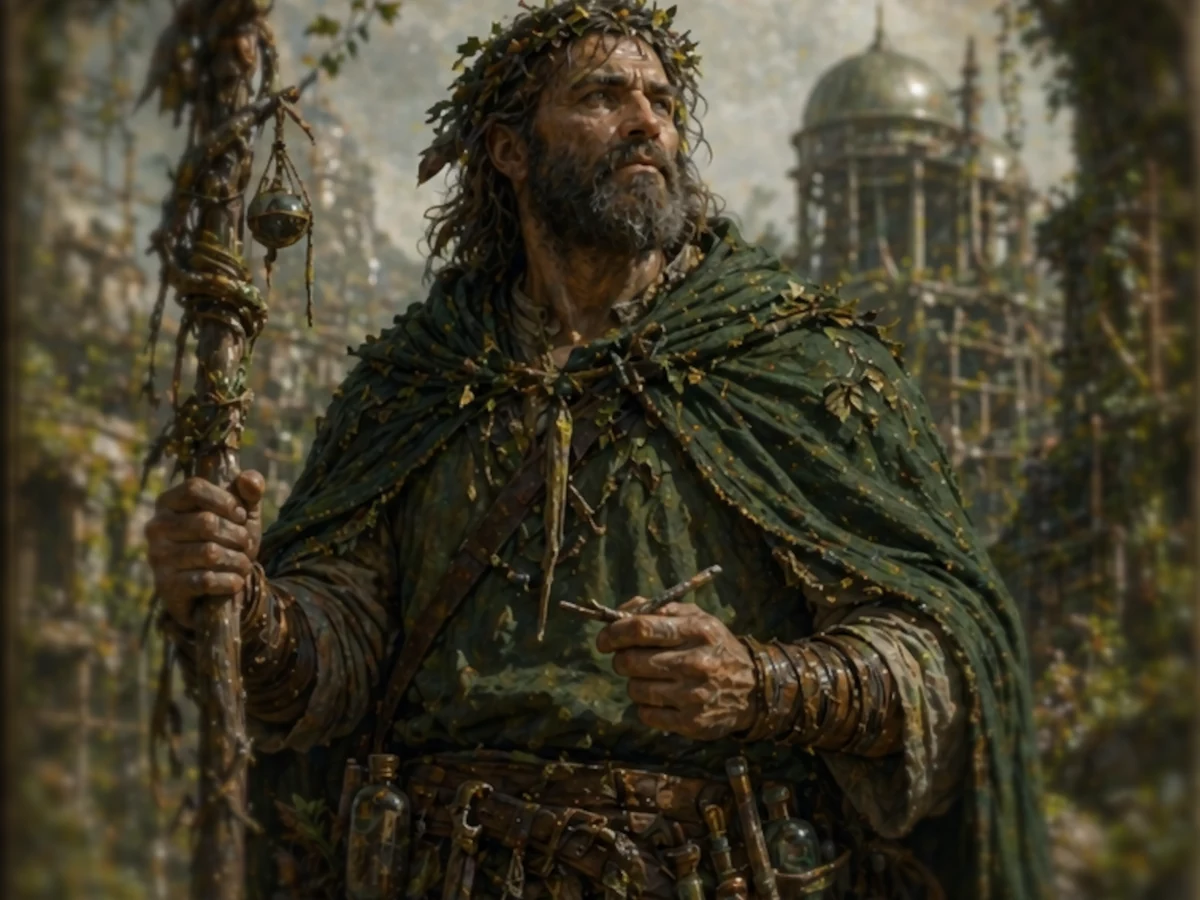
Agathoi establish territory rather than merely occupying it. Resilient infantry, defensive machinery and interlocking Structures reward patience, mutual support and measured counter-advance.
Agrarian communities, builders and guardians of living land, deeply suspicious of digital technology and fiercely protective of their territory. Peaceful by inclination, formidable when rooted.
Plays like: growing a fortress across the battlefield until defence itself becomes an advance.

Fabeot attacks the systems behind the battle. It manipulates ENE, information and timing, reduces the enemy’s good choices and turns uncertainty into control.
A secret order operating through agents, influence and hidden hierarchies. Corporate, occult and conspiratorial; black attire, red shoes and the sense that every public event conceals another design.
Plays like: fighting the opponent’s plan rather than their army, then striking when their options collapse.
Digital doctrine work focuses on stable network growth, Strategic Point commitment and converting a mature position into actual offensive projection.
The AI is tested for combined-arms timing, Commander deployment, forward commitments and the ability to turn formation into sustained assault.
Digital tests watch whether numbers and aggression become useful pressure rather than simple clustering or wasteful exposure.
The rules environment makes it possible to test whether resilience and Structures eventually create movement and counter-pressure instead of permanent passivity.
Automated play is used to inspect whether economic disruption, denial and conditional effects genuinely alter enemy decisions rather than merely add noise.
Arena Rubra has not been balanced only on paper. Across development, more than one thousand matches have been used to observe how the rules behave when strategies collide repeatedly. Testing combines manual matches, player-versus-AI sessions, bot-versus-bot simulations, repeated faction matchups, reversed starting positions, telemetry inspection, runtime logs, targeted regression tests, balance experiments and doctrine-specific AI tests.
A rule can sound elegant and still produce bad games. Arena Rubra treats the match itself as evidence.
play → measure → diagnose → patch → retest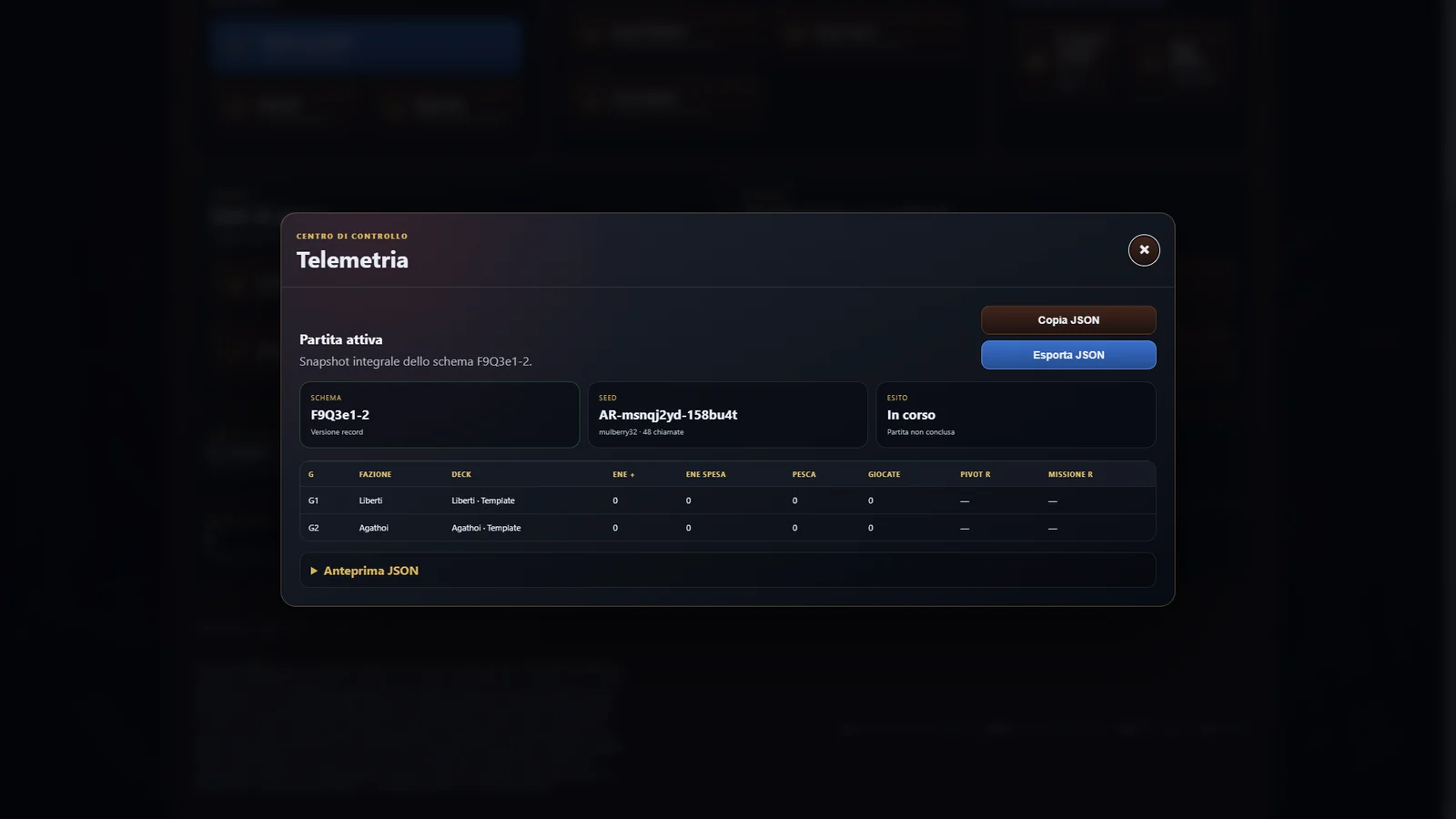
Does each faction actually play differently?
Do Strategic Points create movement rather than static clustering?
Does ENE produce meaningful trade-offs?
Do victory conditions resolve games without arbitrary endings?
Is a strong card strong because of cost, position or raw efficiency?
Can automated players express faction identity rather than generic tactics?
Can the rules survive unusual combinations and long matches?
Can players understand what happened and why?
Arena Rubra Digital and Arena Rubra Tabletop are two expressions of the same strategy system. Digital play accelerates iteration, telemetry and large-scale balance testing; tabletop play exposes the physical clarity, pacing and decision weight of every rule. Each version tests the other, and both evolve from the same strategic core.
The goal is not numerical identity between the two versions. The goal is preservation of the same strategic character while each medium is allowed to demand different solutions.
Playable browser rules environment, AI opponents, telemetry and rapid iteration.
Physical tactical card / board-game branch focused on readable state and practical play.
Explore →ToolArena Rubra Card ComposerCompanion workflow for composing and exporting Arena Rubra cards.
Explore →Real development captures. Click any frame to inspect the full image.
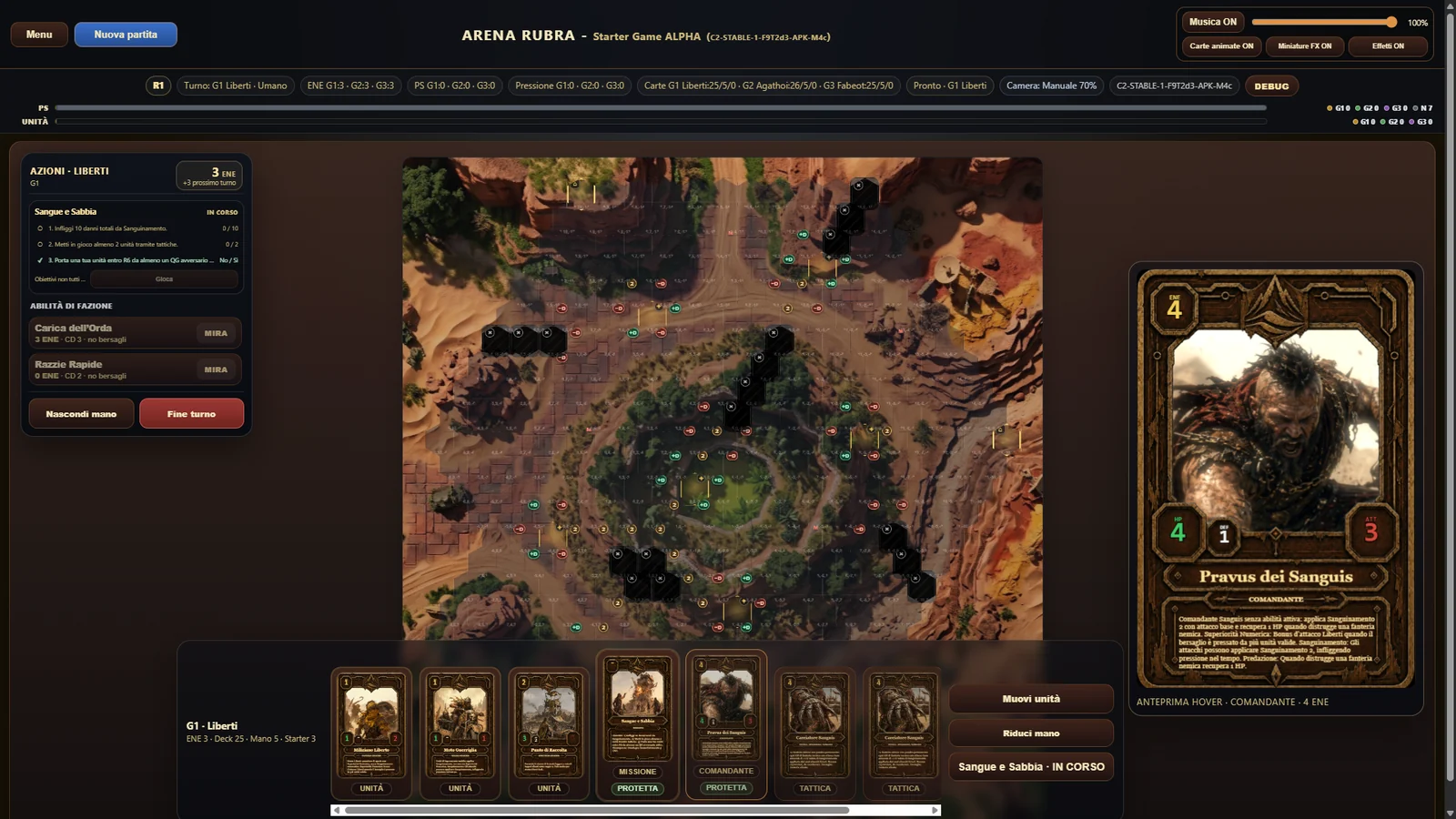
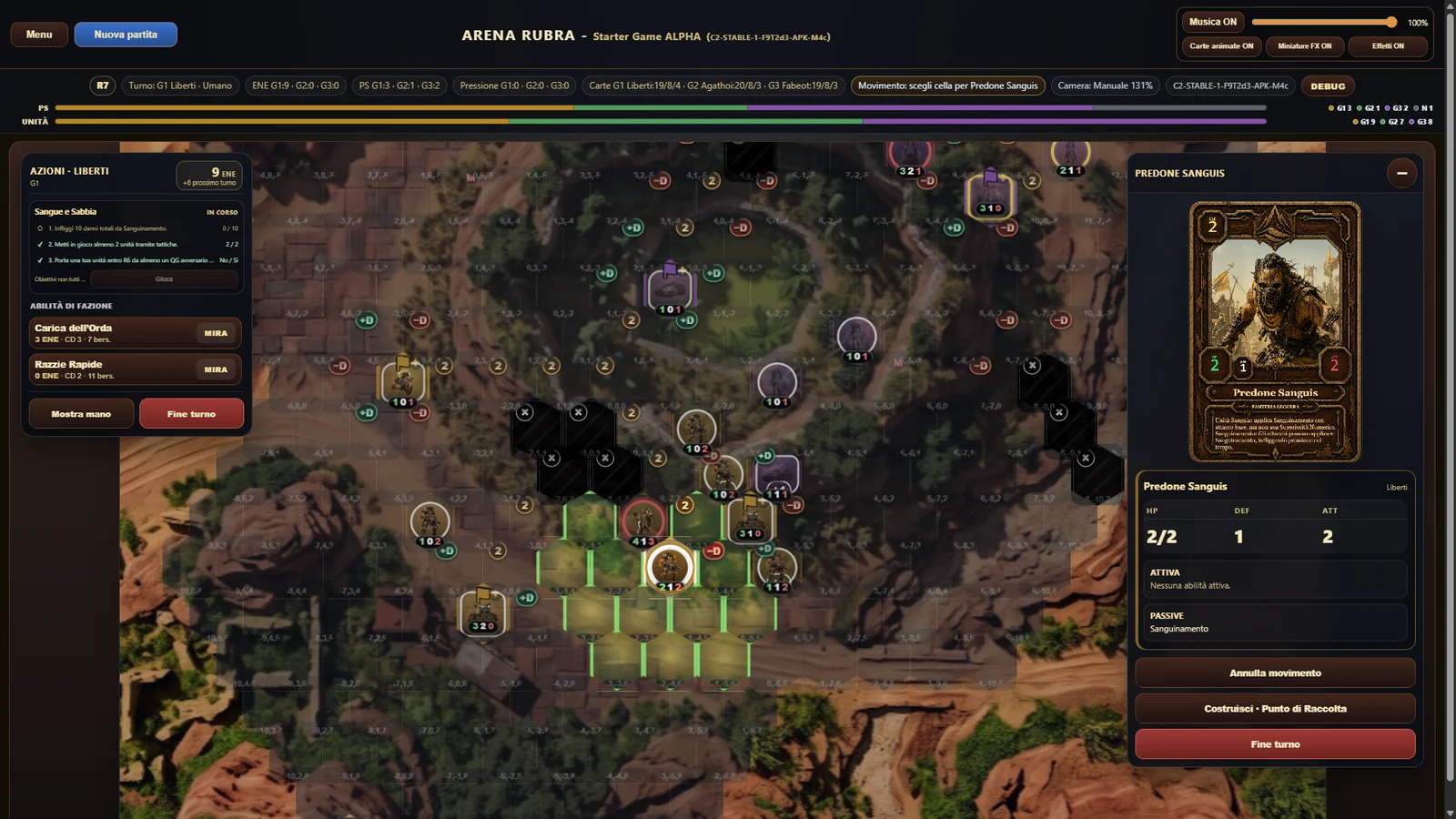
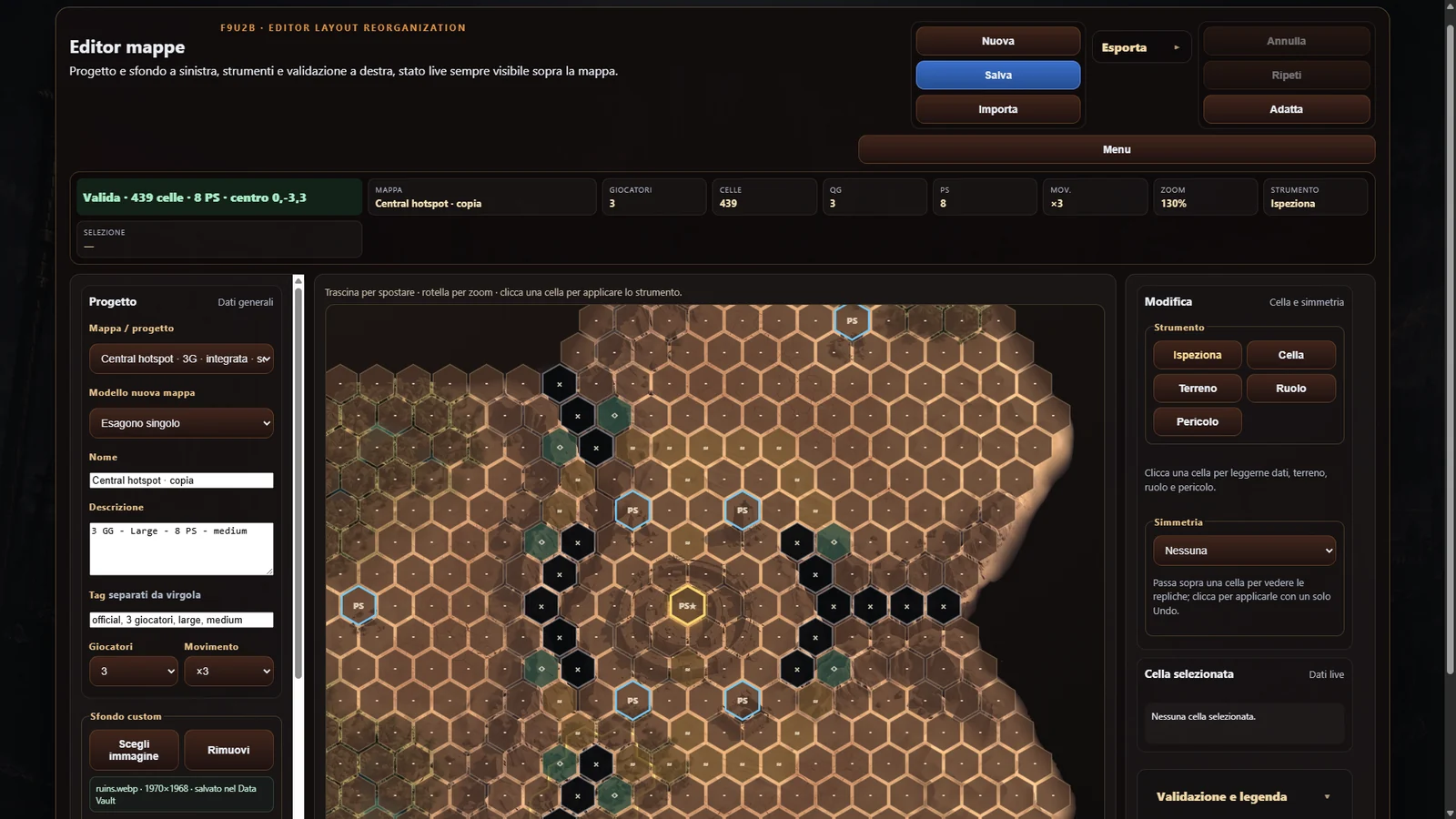
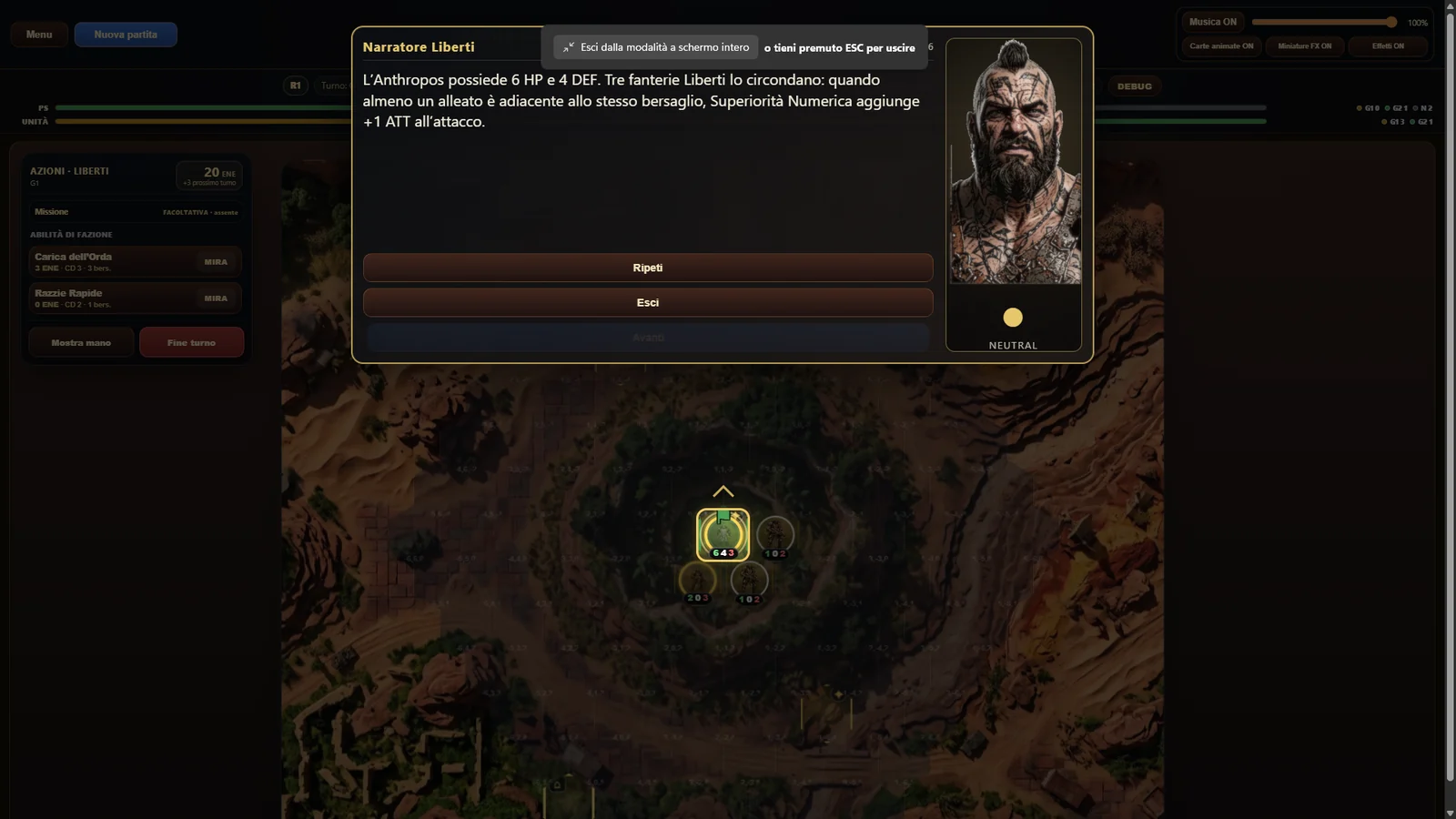
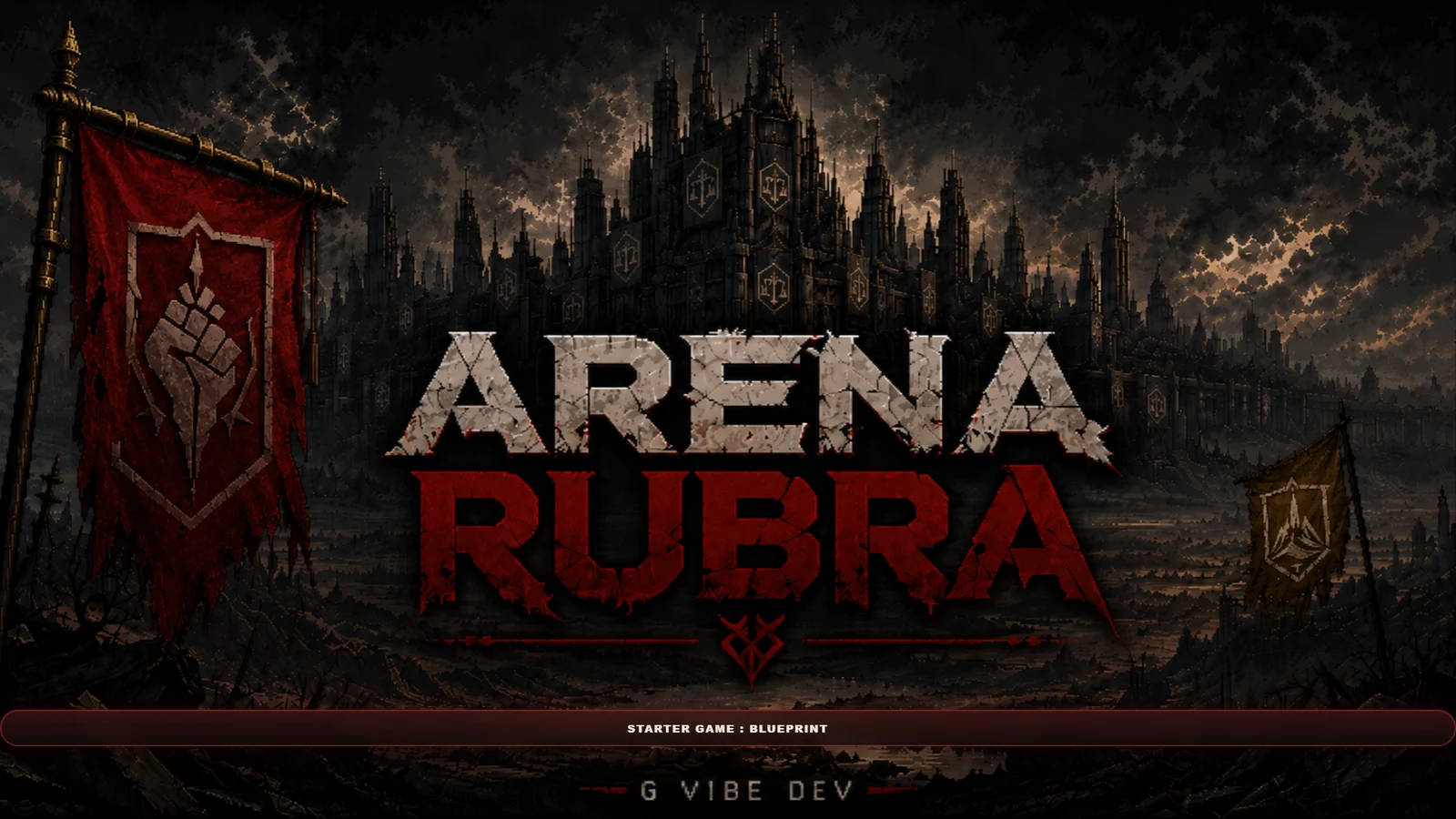
AI is used throughout Arena Rubra development as an engineering and analysis partner: to reason about systems, propose implementations, investigate regressions, inspect telemetry and help translate design requirements into code.
That does not remove the need for direction. Rules still have to be chosen. Builds still have to be tested. Unexpected behaviours still have to be reproduced. Features still have to earn their place, and a statistically interesting result still needs to be interpreted in the context of the game that produced it.
The project is therefore less interesting as a claim about what a prompt can generate and more interesting as a record of what becomes possible when implementation speed is paired with requirements, acceptance criteria, repeated testing and deliberate rejection of solutions that do not work.
Arena Rubra Digital remains an active work in progress. The browser build is real and playable, while interface details, balance, AI behaviour, maps, assets and supporting tools continue to evolve through validated baselines.
The public repository remains the reference point for the code shared outside the local development archive. The live application is a development-facing demo rather than a claim of final release status.
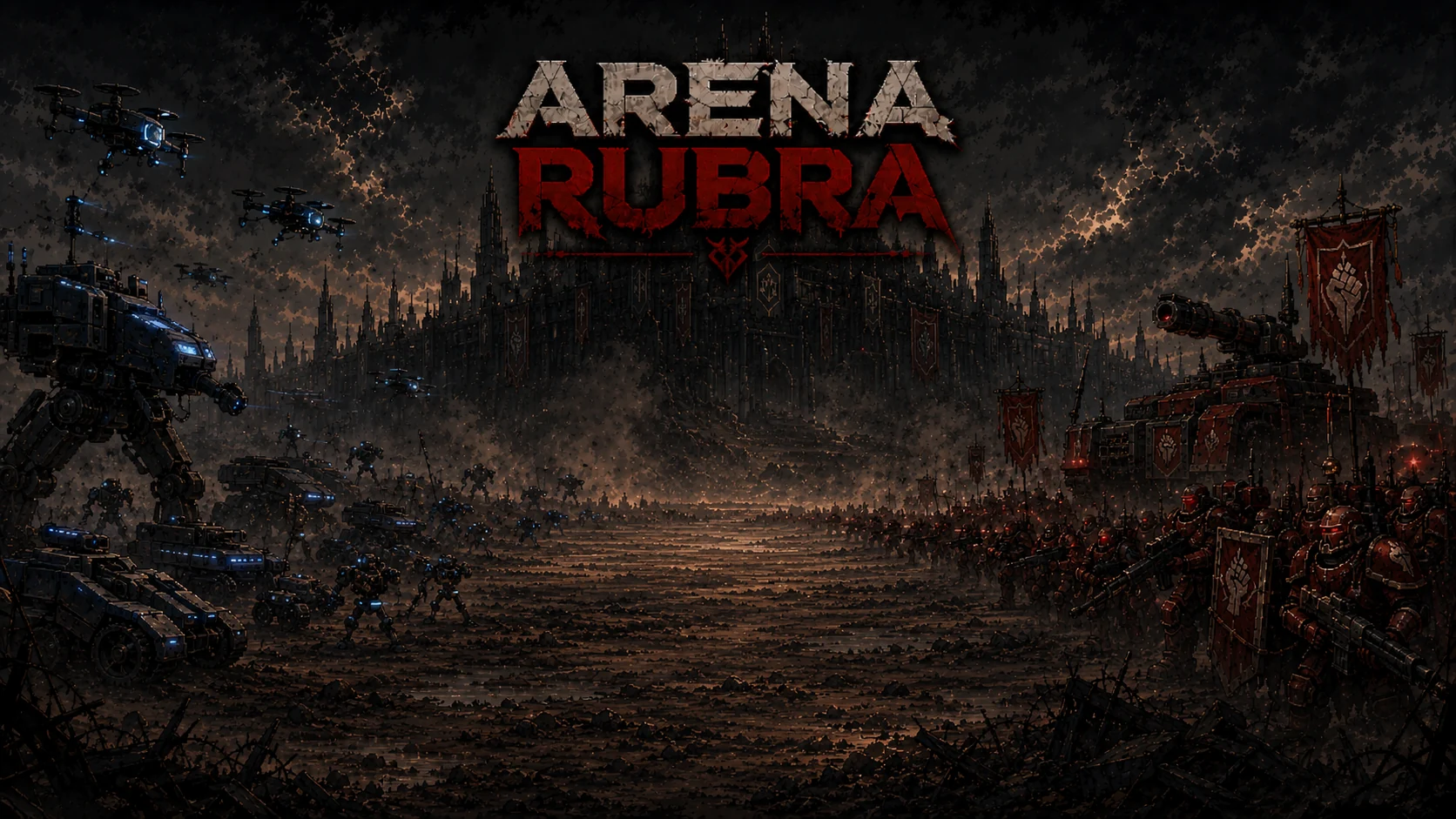
Arena Rubra already has a playable browser build and public repository. This hub separates those real endpoints from the Starter roadmap, future community surfaces and any later commercial edition.
The current browser demo is public and playable.
Play nowThe public repository remains the code reference shared outside the local development archive.
Open GitHubVoluntary project support routes through the shared GVibeDev Support page.
Open SupportThe free Starter Game is the next product-facing public target; the current demo must not be presented as its final form.
In developmentDedicated player-facing documentation will be published when the Starter rules surface is ready.
PlannedThe site does not yet expose a dedicated Arena Rubra release changelog surface.
PlannedThe future Community Depot will require its own content and moderation workflow; no backend is implied by this page.
PlannedCards already exist inside the game, but a public community catalogue is not published yet.
PlannedDeck tools exist in the application; a public shareable deck catalogue remains future infrastructure.
PlannedMap authoring exists in the application; a public map catalogue or Depot endpoint is not active.
PlannedA possible commercial Full Edition remains a future distinction, not a current product or purchase offer.
Planned